
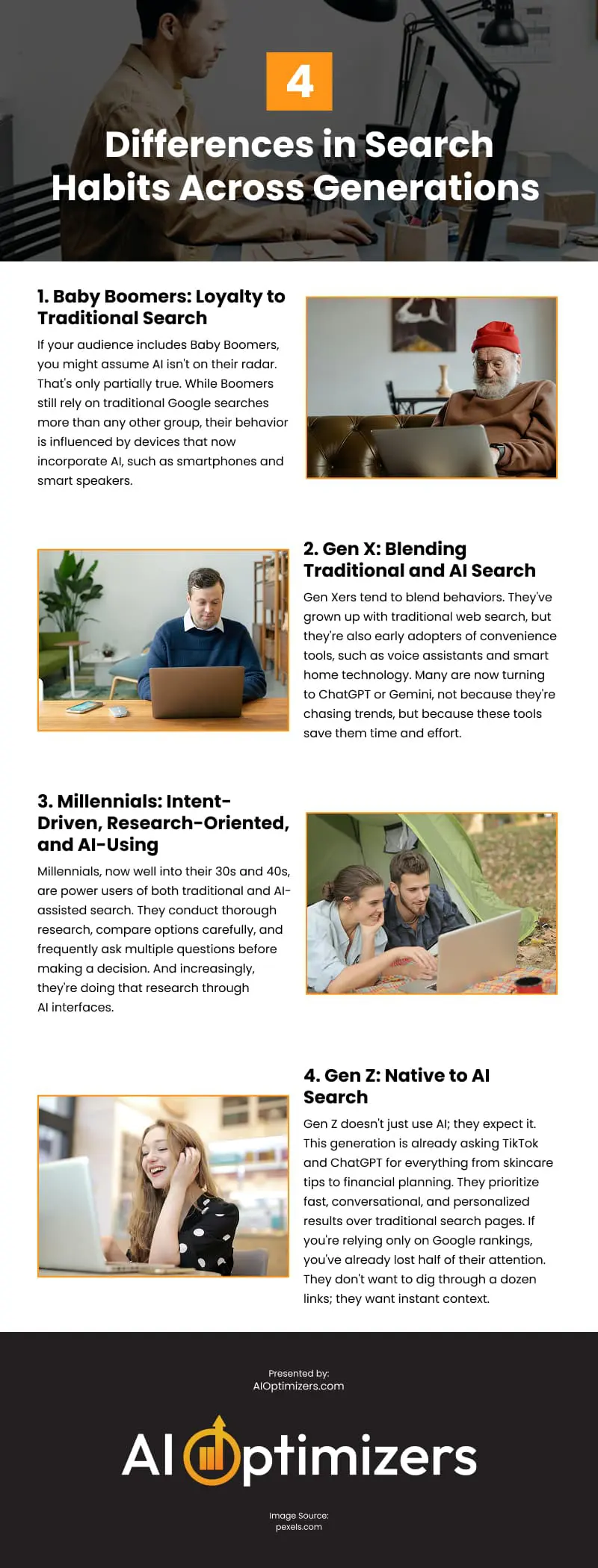
Search behavior is no longer one-size-fits-all, and generational differences now play a significant role in how brands are discovered through both traditional and AI-driven platforms. Older audiences still lean heavily on Google-style search, but even they are being influenced by AI through smartphones, voice assistants, and smart devices that shape how results are delivered. Midlife users often blend habits, relying on familiar search engines while increasingly turning to AI tools for faster, more efficient answers when convenience takes precedence over exploration. Younger professionals are highly intentional in their search, conducting in-depth research, comparing options, and asking nuanced questions, with AI interfaces becoming a central part of that decision-making process. The youngest generation takes this even further, expecting search to be conversational, instant, and personalized by default. They often bypass traditional search pages entirely, using AI tools and social platforms as their primary sources of information. These differences directly influence how AI models surface brands, summarize authority, and recommend solutions. If your content strategy is built solely around classic search rankings, you risk missing visibility across AI-generated answers, where trust, clarity, and relevance are condensed into a few responses. To stay visible, brands must align their messaging with how each generation actually searches today.
source: https://www.aioptimizers.com/how-generational-search-habits-shape-ai-web-performance/
Comments
Download this infographic.