Oct 6, 2026
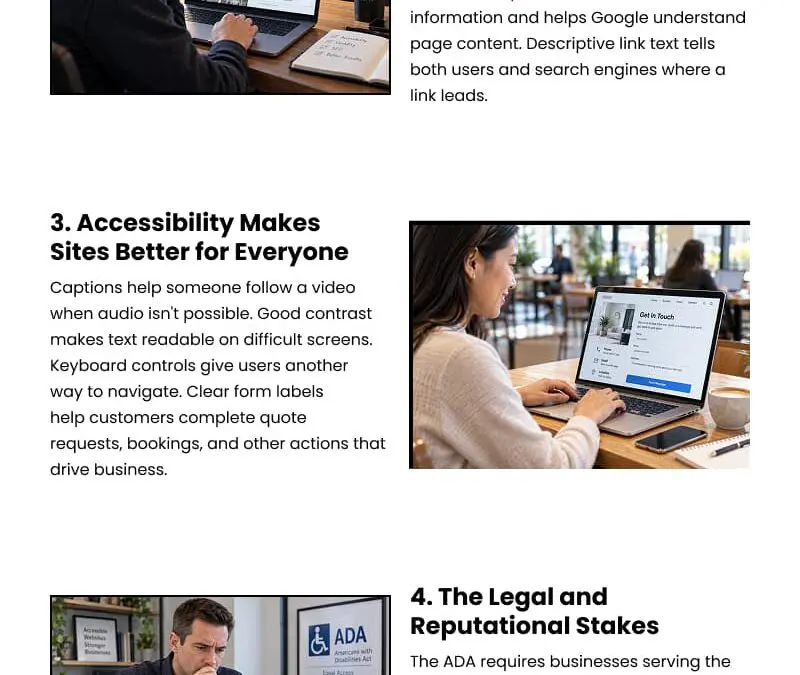
A website that works for most visitors may fail entirely for others, and those failures cost businesses customers they never knew they lost. WCAG 2.2 sets the requirements designers use to prevent those failures, covering form labels connected in code, menus that work...

Aug 20, 2026
Too many calls to action don’t increase conversions; they prevent them. When competing offers, pop-ups, banners, and multiple buttons all demand attention at once, analysis paralysis sets in. Most visitors leave rather than sort through the confusion. Cluttered...
Jul 7, 2026
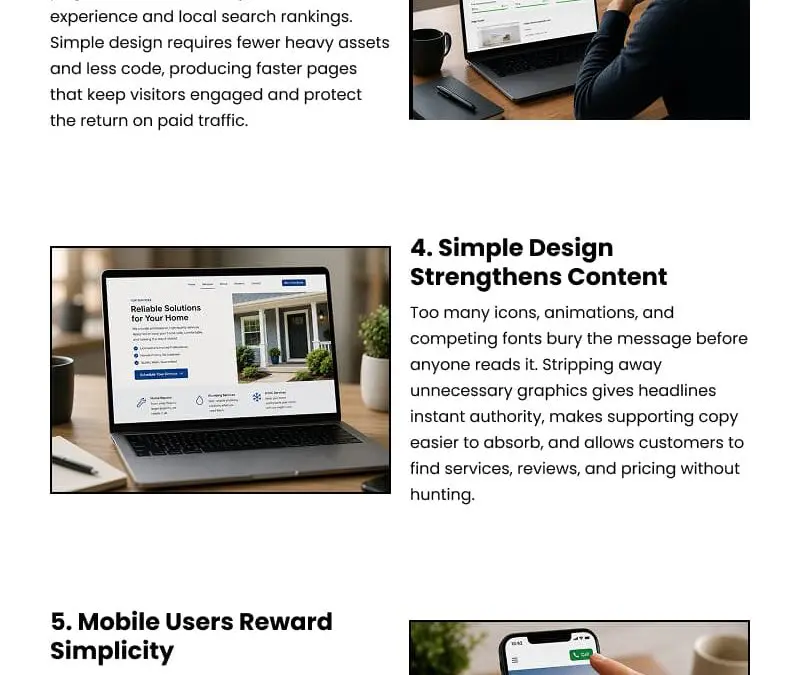
Simple website design consistently outperforms fancy alternatives because it removes the friction standing between a visitor and the action you want them to take. Clean layouts answer the basic questions visitors arrive with: what do you do, where are you, how do I...
Jun 18, 2026
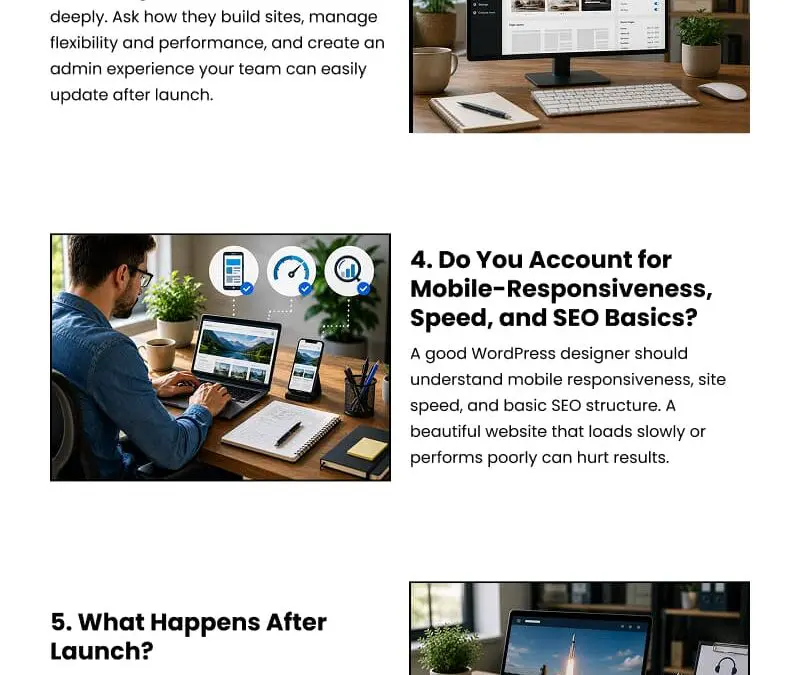
Everyone wants a WordPress designer who can build a site that looks great and performs well. That takes real technical skill and clear communication from day one. The good news is that asking the right questions up front helps you find the right fit. Start with their...
May 5, 2026
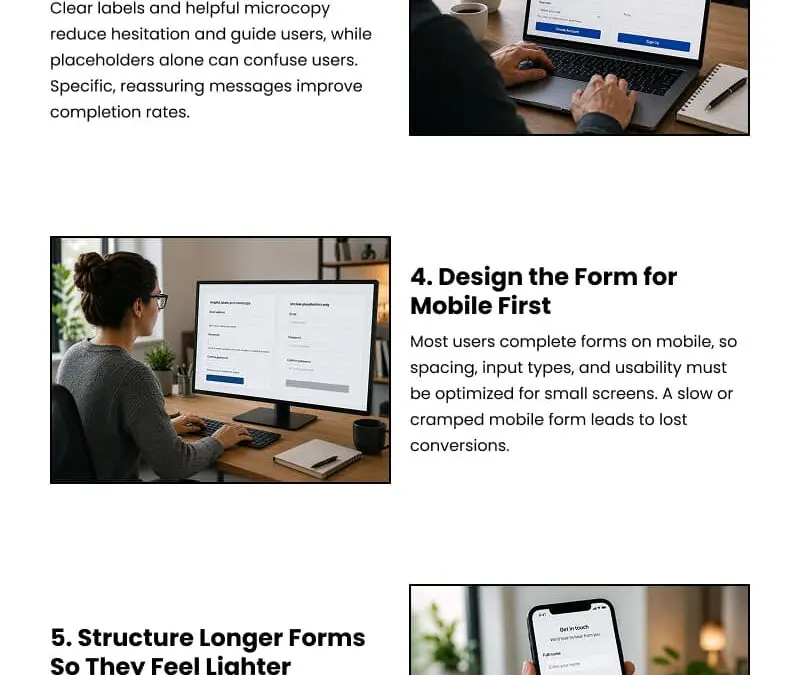
Effective web forms play a major role in turning website visitors into leads, yet many businesses unintentionally create forms that feel overwhelming, confusing, or frustrating to complete. Successful forms start with a single clear objective so users immediately...
Apr 7, 2026
Running paid ads without strong website performance can quietly drain your budget, as even high click volumes mean little if visitors leave without taking action. A common issue is mismatched messaging: the promise made in an ad doesn’t align with the landing...
Post Infographics > Web Design