
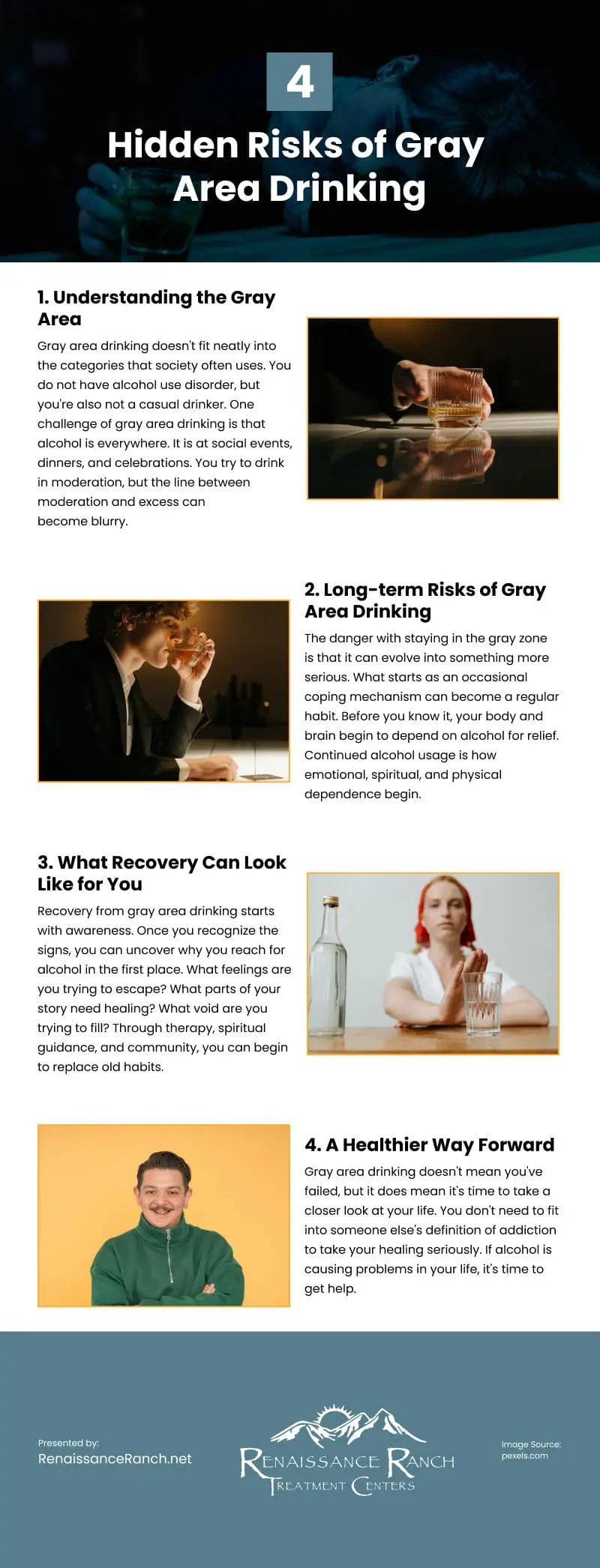
Gray area drinking often develops quietly, slipping into daily routines before it’s fully recognized, which can make it difficult to address. It describes a space where alcohol use doesn’t meet the definition of addiction, yet no longer feels casual or fully in control. Because drinking is woven into social gatherings, celebrations, and stress relief, the boundary between moderation and excess can slowly blur. Over time, relying on alcohol to relax, cope, or escape emotional discomfort can create patterns that affect mental clarity, physical health, and spiritual well-being. The longer these habits persist, the greater the risk of dependence forming beneath the surface, even if outward signs seem manageable. Healing begins with honest self-awareness and a willingness to explore why alcohol has taken on a larger role. Recovery doesn’t follow a single path and may include therapy, peer support groups, faith-based programs, or more structured treatment, depending on individual needs. Choosing support is not a sign of failure, but an act of self-respect and courage. You don’t need to meet anyone else’s definition of addiction to take your concerns seriously. If alcohol is limiting your peace, growth, or relationships, a healthier, more fulfilling way forward is possible.
source: https://renaissanceranch.net/gray-area-drinking-and-its-hidden-risks/
Comments
Download this infographic.