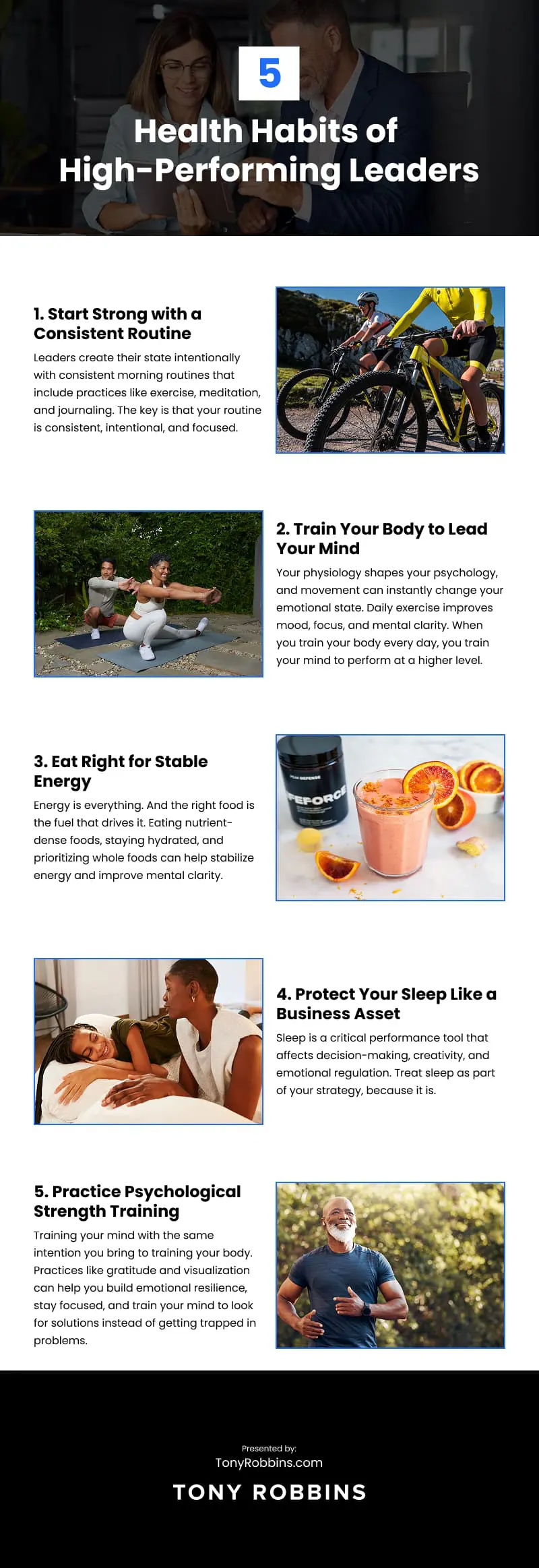
Strong leadership begins with personal health and self-management, because the way leaders care for their minds and bodies directly influences their decision-making, energy, and ability to guide others effectively. Consistent daily routines help create stability and focus, allowing leaders to approach challenges intentionally rather than reactively. Morning habits such as exercise, meditation, journaling, or quiet reflection can improve clarity, discipline, and emotional control before the demands of the day begin. Physical movement also plays a major role in leadership performance, as regular exercise boosts mood, strengthens resilience, sharpens concentration, and helps regulate stress. Nutrition is equally important, since stable energy levels depend on proper hydration and nutrient-dense foods that support mental focus and sustained productivity. Sleep should be viewed as a critical business asset rather than a luxury, because quality rest affects creativity, judgment, emotional regulation, and overall performance under pressure. In addition to physical health, psychological strength training helps leaders maintain perspective and resilience during difficult situations. Practices such as gratitude, mindfulness, and visualization encourage solution-focused thinking and improve emotional resilience over time. Together, these habits create a foundation that supports long-term leadership effectiveness, helping individuals lead with greater consistency, clarity, and confidence. When leaders intentionally prioritize their own health, they are better equipped to inspire teams, navigate challenges, and build organizations that perform at a higher level.
source: https://www.tonyrobbins.com/blog/five-health-habits-of-high-performing-leaders
Comments
Download this infographic.