
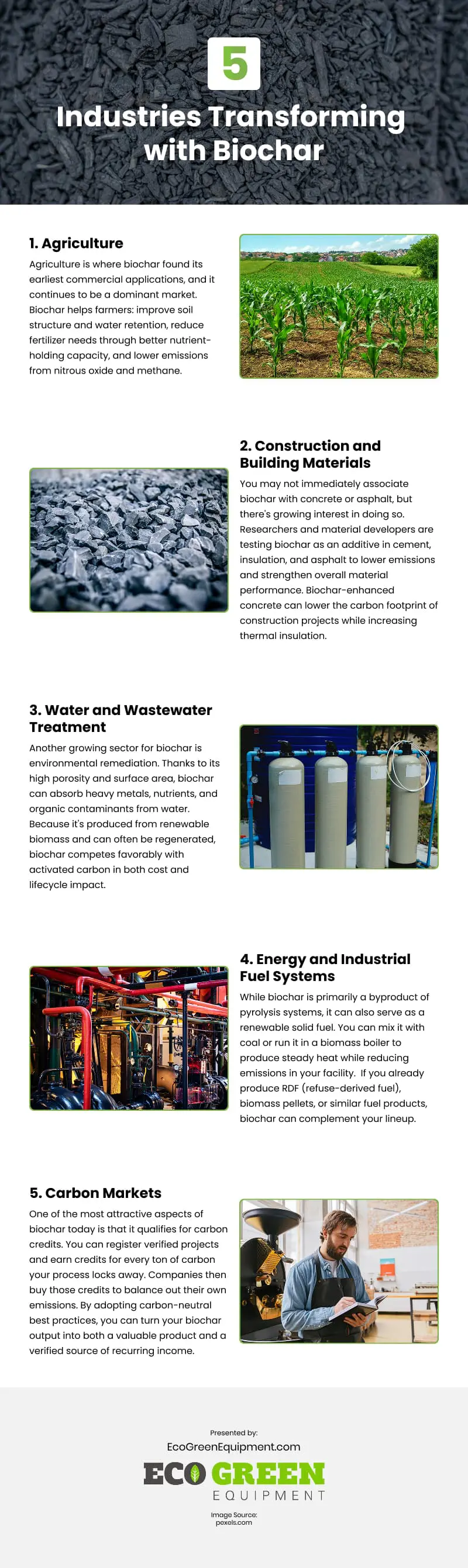
Biochar is becoming a powerful sustainability asset because it locks carbon into a stable form for centuries while offering versatile applications across multiple industries. It supports agriculture by improving soil structure, boosting water retention, reducing fertilizer needs, and lowering methane and nitrous oxide emissions. In construction, biochar-enhanced materials, such as concrete, asphalt, and insulation, help reduce the carbon footprint of building projects while enhancing performance and improving thermal efficiency. Its high porosity makes it valuable in water and wastewater treatment, where it captures heavy metals, organic contaminants, and excess nutrients—often performing as well as activated carbon but with a lower lifecycle impact. Biochar also plays a growing role in energy systems, serving as a renewable solid fuel that can be co-fired with coal or used in biomass boilers for cleaner heat generation. For facilities already producing biomass pellets or RDF, biochar integrates seamlessly into existing fuel portfolios. In carbon markets, biochar stands out as one of the most straightforward ways to earn verified carbon credits, enabling producers to monetize every ton of carbon stored through long-term sequestration. By adopting biochar across these industries, organizations can enhance their sustainability efforts while unlocking new revenue streams.
source: https://ecogreenequipment.com/how-biochar-drives-sustainability-across-multiple-industries/
Comments
Download this infographic.