
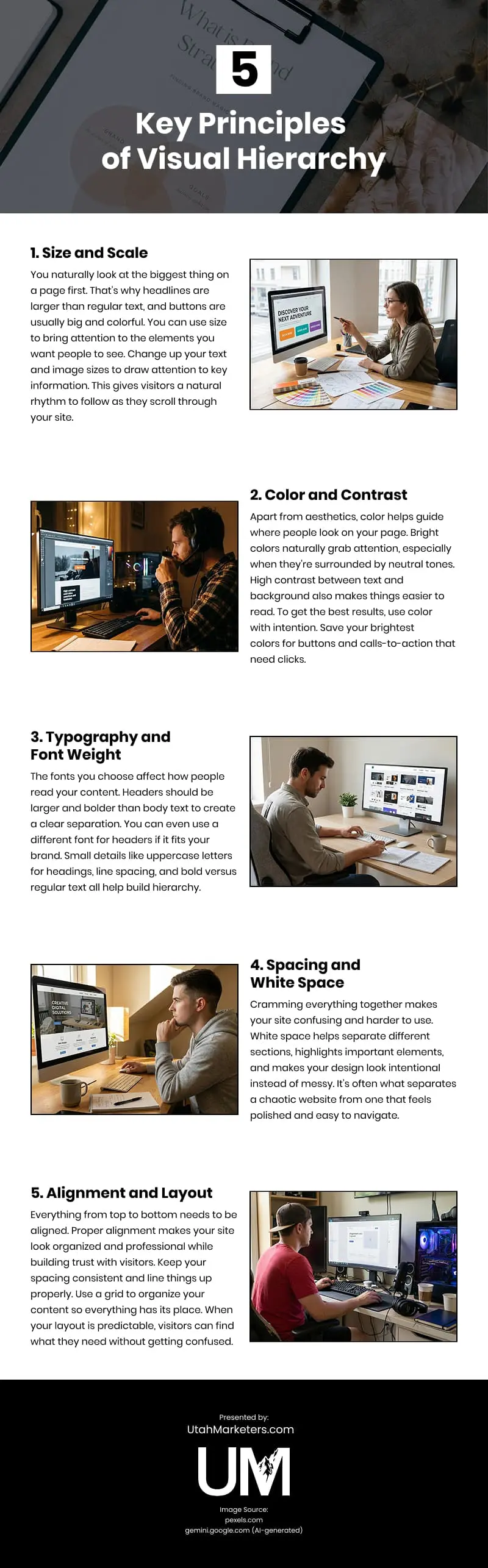
Visual hierarchy plays a crucial role in how users experience a website, shaping where their attention goes and how easily they understand content. When a webpage feels cluttered or confusing, the issue often lies in how design elements compete for attention rather than guide it. Effective hierarchy uses size and scale to emphasize key information, ensuring headlines, images, and calls-to-action naturally stand out and create a clear visual flow as visitors scroll. Color and contrast further direct focus, with intentional use of bright tones highlighting important elements while strong contrast improves readability. Typography also contributes by establishing clear distinctions between headings and body text through font choice, weight, spacing, and styling, making content easier to scan and absorb. Adequate spacing and white space prevent overcrowding, helping separate sections, highlight priorities, and create a polished, user-friendly appearance. Alignment and consistent layout reinforce structure, giving each element a defined place and making navigation intuitive. Using grids and predictable patterns builds trust by presenting information in a logical, organized way. When these principles work together, web pages not only look more professional but also perform better by improving usability, clarity, and engagement.
source: https://www.utahmarketers.com/why-visual-hierarchy-matters-for-your-website/
Comments
Download this infographic.