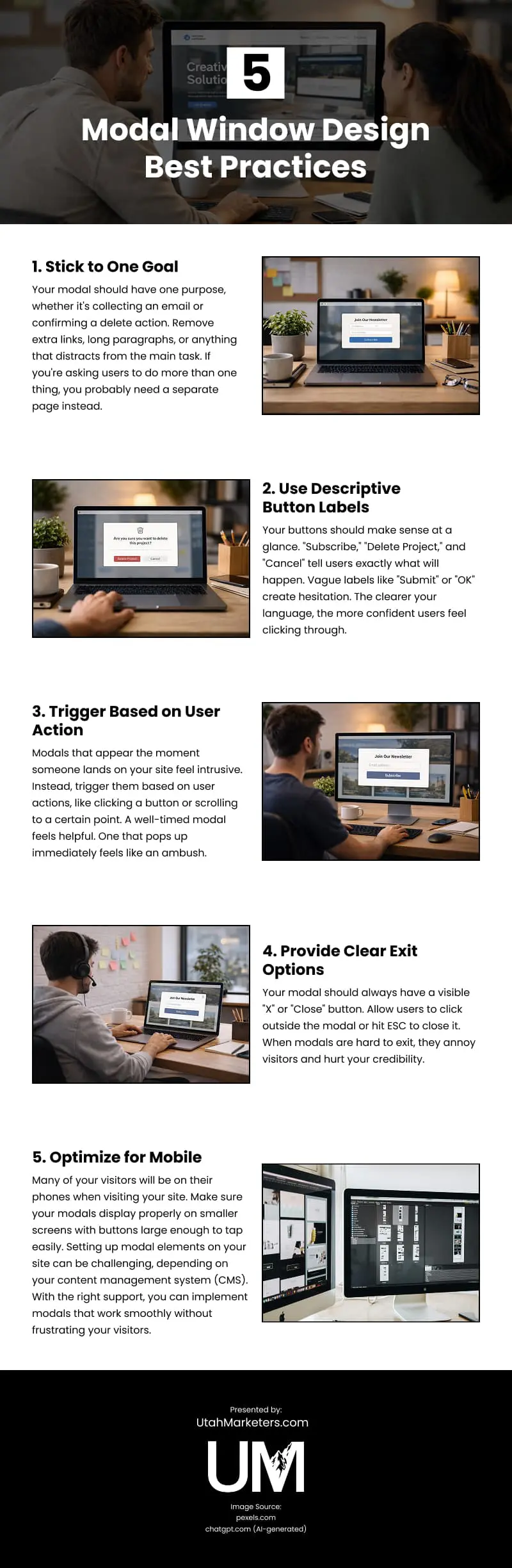
Modal windows are powerful tools in web design, helping focus user attention while keeping interfaces clean by revealing information only when needed. However, their effectiveness depends on thoughtful execution, as poorly timed or difficult-to-close modals can quickly frustrate users. The most effective modals focus on a single, clear goal, avoiding unnecessary distractions that dilute the user’s focus. Clear and descriptive button labels play a crucial role in guiding user actions, reducing hesitation, and building confidence with each click. Timing is equally important: modals perform best when triggered by user behavior, such as scrolling or clicking, rather than appearing immediately and interrupting the experience. Providing simple, visible exit options, such as close buttons or the ability to click outside the modal, ensures users feel in control and prevents negative perceptions of the interface. Mobile optimization is also essential, as many users access websites on smaller screens, requiring responsive layouts and easily tappable buttons. When designed with usability in mind, modals can enhance engagement and streamline interactions, but when overused or poorly implemented, they risk damaging user trust. Striking the right balance between attention and convenience allows modal windows to support user goals while maintaining a smooth, frustration-free experience.
source: https://www.utahmarketers.com/exploring-modal-windows-in-web-design/
Comments
Download this infographic.