
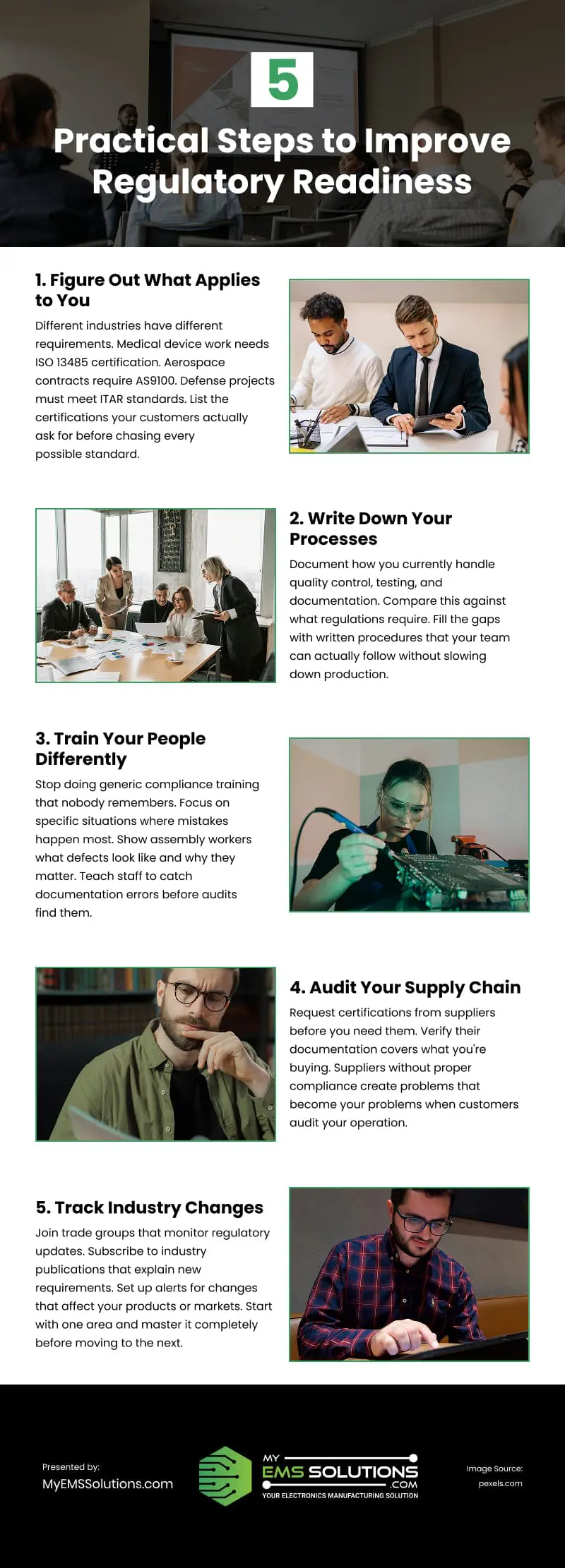
Regulatory compliance is more than a box to check—it’s a competitive advantage that opens doors your competitors can’t access and keeps your operations running smoothly from the start. Instead of scrambling to fix gaps once production is underway, building compliance into your workflow early helps you secure contracts, reduce risk, and avoid expensive setbacks. The process begins with identifying the exact certifications your industry and customers require, ensuring you pursue only what truly matters. From there, documenting your current procedures and comparing them to regulatory standards creates clarity and reveals the gaps you need to close with practical, usable processes your team can follow. Effective compliance also depends on targeted training that focuses on real-world mistakes, helping employees identify defects, prevent documentation errors, and understand the importance of precision. Strengthening your supply chain is equally essential—verifying supplier certifications and audit readiness protects you from surprises during customer reviews. Staying compliant over time requires tracking industry changes through trade groups, publications, and alerts, so you can adapt before new requirements are implemented on your floor. By approaching compliance as an integrated, strategic foundation rather than a last-minute task, you build stronger systems, win better business, and position your company as a reliable partner in demanding markets.
source: https://www.myemssolutions.com/what-you-dont-know-about-regulatory-standards-could-cost-you/
Comments
Download this infographic.