
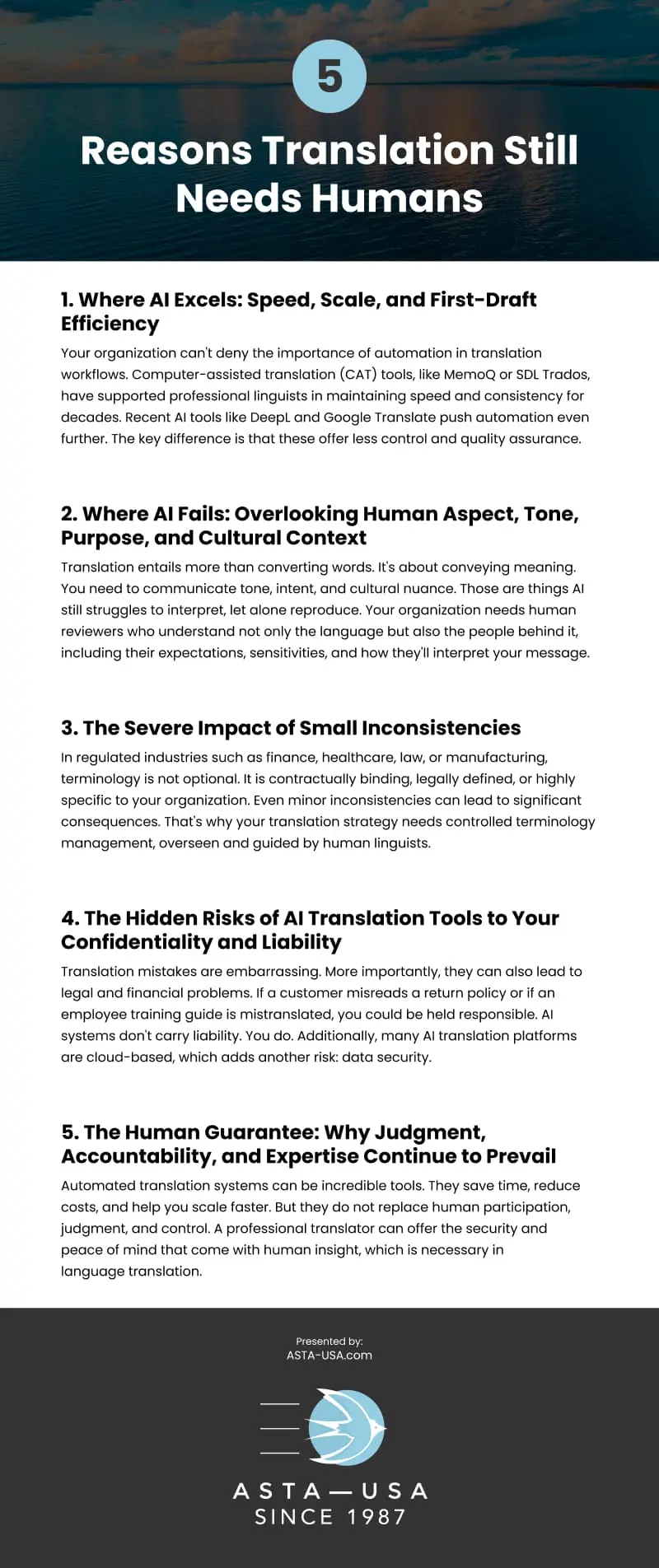
Automation has transformed translation with incredible speed and scale, allowing organizations to produce first-draft translations in seconds and manage large volumes of content efficiently. Tools like CAT platforms and AI-driven translators help maintain consistency and reduce turnaround time, making them valuable for internal workflows and early-stage drafts. But translation is more than swapping words between languages; it is about preserving meaning, tone, intent, and cultural context. This is where automation alone falls short. AI struggles to comprehend emotional nuance, brand voice, and the nuanced expectations of different audiences, which can result in messages that sound awkward, misleading, or even offensive. In regulated industries such as healthcare, finance, and law, even small terminology errors can carry serious legal and financial consequences. Confidentiality is another critical concern, as many AI tools rely on cloud-based systems that may expose sensitive data. When mistakes happen, AI carries no accountability—your organization does. Human translators bring judgment, cultural intelligence, and responsibility to the process, ensuring terminology is controlled, context is respected, and risk is minimized. The most effective translation strategy blends the efficiency of AI with the oversight of skilled professionals, delivering both speed and accuracy without sacrificing trust, compliance, or brand integrity.
source: https://asta-usa.com/why-humans-are-still-essential-in-language-translation/
Comments
Download this infographic.