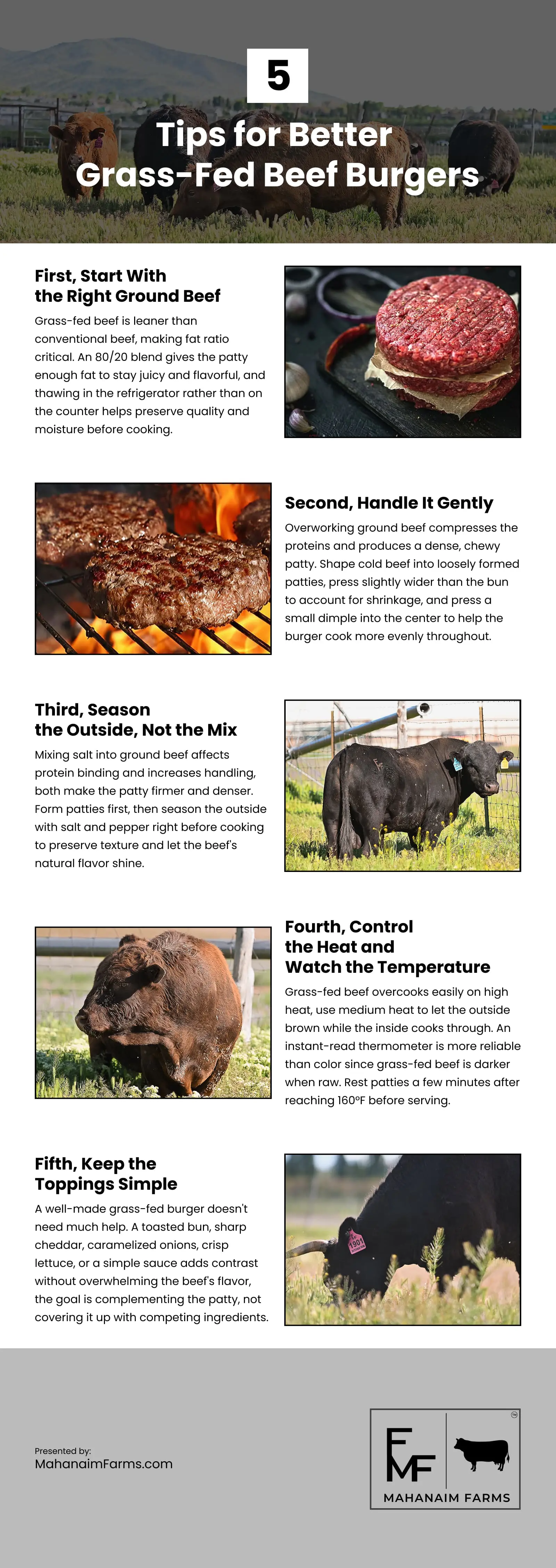
Grass-fed beef makes an exceptionally flavorful burger, but because it’s leaner than conventional beef, a few small adjustments make the difference between a juicy, satisfying patty and a dry, overcooked one. Fat ratio is the starting point: an 80/20 blend gives the patty enough fat to stay moist through cooking, which matters even more with dry-aged grass-fed beef. Gentle handling preserves tenderness — overworking the meat compresses proteins, producing a dense, chewy result that no amount of seasoning can fix. Seasoning belongs on the outside of the formed patty, added right before cooking, since mixing salt into the meat affects protein binding and requires extra handling that makes the patty firmer. Grass-fed beef overcooks quickly at high heat, so medium heat and an instant-read thermometer replace the color-based guesswork that works less reliably with darker grass-fed meat — and resting the patty for a few minutes after it reaches 160°F keeps the juices in the burger rather than on the plate. Finally, simple toppings let the beef’s natural flavor lead. A toasted bun, sharp cheddar, and a clean sauce complement the patty without competing with the quality that good grass-fed beef already brings to the grill.
source: https://www.mahanaimfarms.com/five-tips-for-better-grass-fed-beef-burgers/
Comments
Download this infographic.