
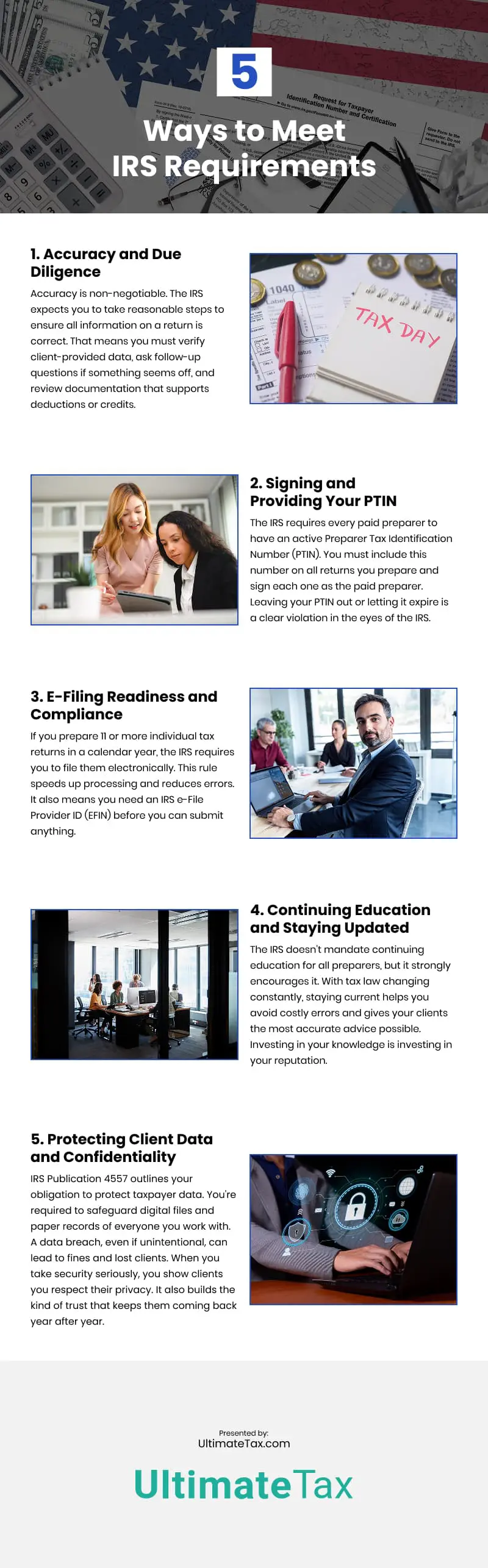
RS standards for tax preparers are designed to promote accuracy, accountability, and trust, making compliance essential for anyone preparing returns professionally. One of the most important expectations is accuracy and due diligence, which requires preparers to verify information, review supporting documents, and ask follow-up questions when details appear inconsistent. The IRS also requires every paid preparer to maintain an active Preparer Tax Identification Number and include it on all prepared returns, ensuring accountability and proper identification. Electronic filing compliance is another key standard, especially for preparers handling larger volumes of returns, as the IRS encourages faster processing and reduced errors through approved digital systems. Staying informed about changing tax laws is equally important, since ongoing education helps preparers avoid mistakes and provide reliable guidance to clients. In addition to technical accuracy, protecting client data is a critical responsibility. Tax preparers are expected to secure both digital and physical records to prevent breaches and maintain confidentiality. Strong security practices not only reduce legal and financial risks but also build long-term client trust. By consistently meeting these standards, tax professionals demonstrate professionalism, improve the quality of their services, and strengthen their reputation. Understanding and following these core expectations creates a solid foundation for long-term success while helping clients feel confident that their financial information is handled responsibly and accurately.
source: https://ultimatetax.com/blog/a-tax-preparers-guide-to-meeting-the-5-irs-criteria/
Comments
Download this infographic.