
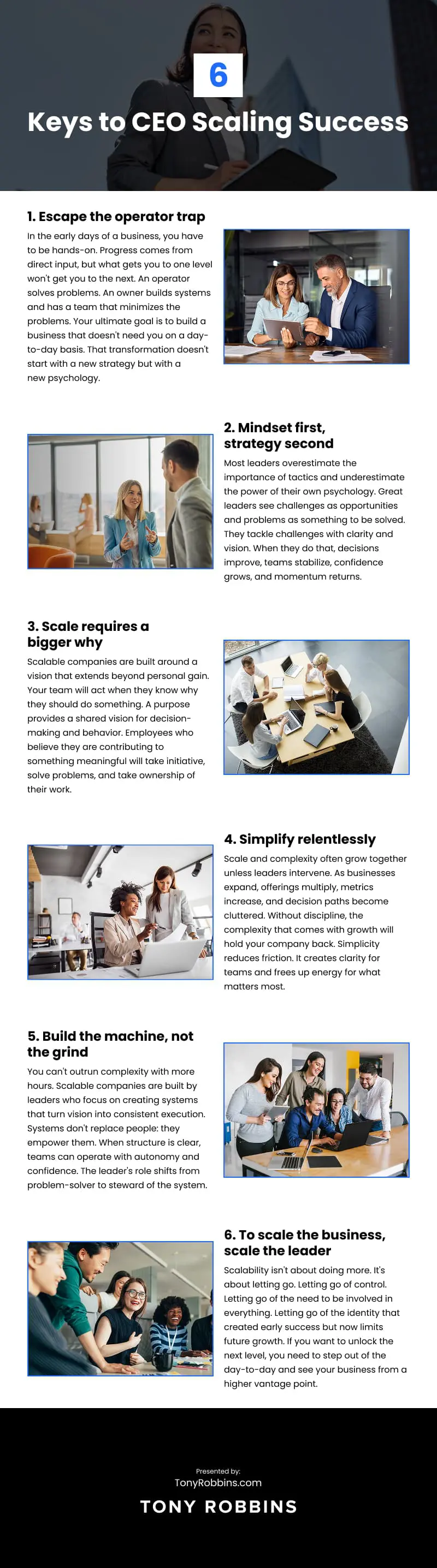
Many companies don’t stall because of competition or market conditions; they stall because the leader never evolves. Growth exposes leadership gaps, especially when a founder continues to operate the business like a job rather than build it like an owner. Early success often comes from being hands-on and solving problems directly, but sustainable scale requires a shift in identity. Operators fix issues in real time, while owners design systems and build teams to prevent them from recurring. Real transformation begins with psychology before strategy, because mindset shapes decision-making, clarity, and momentum. Leaders who approach challenges with vision and composure create stability, inspire confidence, and drive smarter execution across their organizations. Scaling also demands a purpose bigger than personal gain; when teams understand the “why,” they take initiative, act with ownership, and contribute meaningfully to shared goals. As companies grow, complexity naturally increases, and without discipline, it becomes a hidden barrier to progress. Simplifying processes, priorities, and metrics reduces friction and restores focus. Lasting scale comes from building systems that translate vision into consistent performance and empower teams to operate independently. Ultimately, business growth requires personal growth, and the next level begins when leaders release control, step back from daily operations, and lead from a higher perspective.
source: https://www.tonyrobbins.com/blog/inside-the-mindset-of-ceos-who-scale
Comments
Download this infographic.