
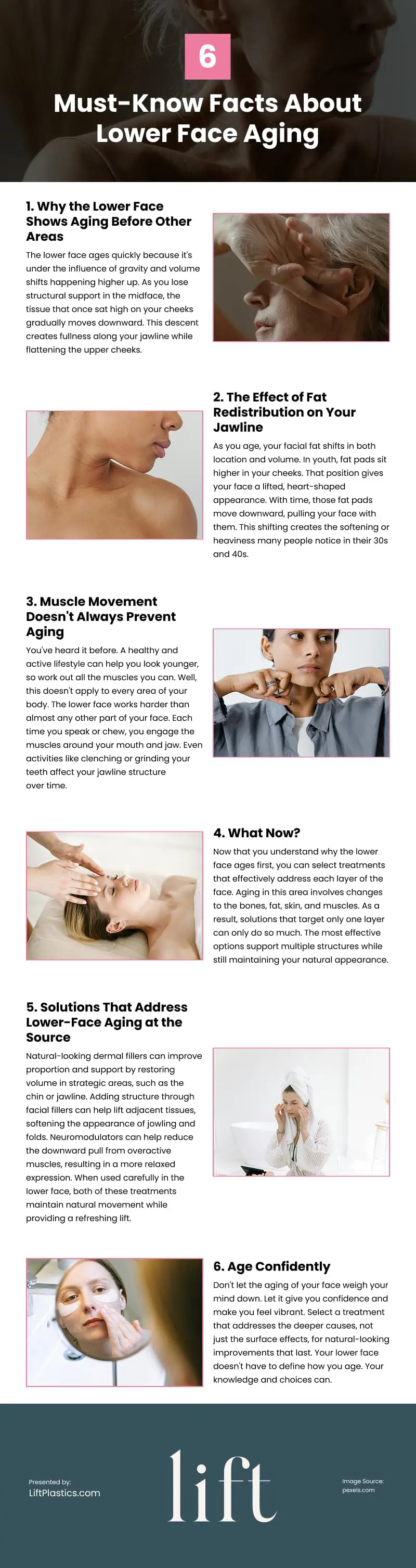
The lower face is one of the most expressive areas of your appearance, constantly in motion as you speak, smile, and eat, which makes it especially vulnerable to early signs of aging. This area tends to change first because gravity and volume loss in the midface cause tissues to shift downward over time, reducing cheek fullness while creating heaviness along the jawline. As facial fat redistributes with age, the fat pads that once sat high in the cheeks gradually descend, altering youthful proportions and contributing to softening, jowling, and a loss of definition in the lower face. Constant muscle activity around the mouth and jaw also plays a role, as these muscles work harder than most others on the face, and habits like clenching or grinding can further influence structural changes. Because aging in the lower face affects multiple layers, including bone, fat, muscle, and skin, surface-level solutions alone often fall short. Treatments that restore structural support, rebalance volume, and ease excessive muscle pull can create more natural, harmonious results. Carefully placed dermal fillers can rebuild proportion and lift surrounding tissue, while neuromodulators can relax downward tension without sacrificing expression. With the right approach, lower-face aging can be addressed thoughtfully, helping you look refreshed, balanced, and confident at every stage.
source: https://liftplastics.com/why-the-lower-face-ages-first-and-what-you-can-do-about-it/
Comments
Download this infographic.