
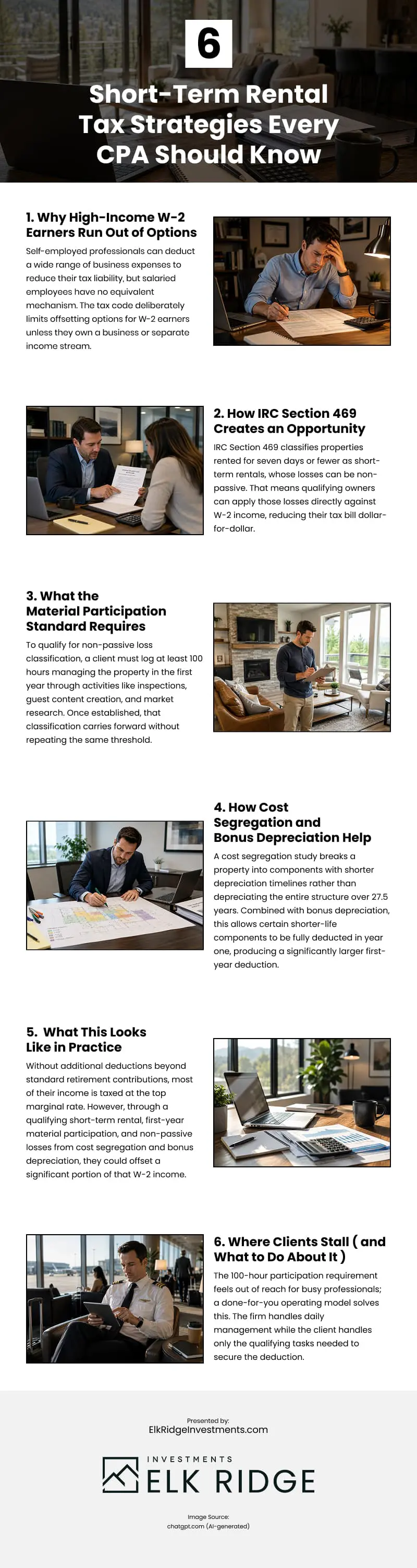
A well-structured short-term rental tax strategy enables salaried clients to significantly reduce their tax burden, especially for high-income W-2 earners who lack the expense deductions available to self-employed individuals. By leveraging IRC Section 469, which classifies properties rented for seven days or fewer as short-term rentals, owners can access non-passive losses that can directly offset W-2 income, effectively lowering their tax liability. To qualify for this classification, clients must complete at least 100 hours of property management activities in the first year, including inspections and guest interactions. Additionally, utilizing a cost segregation study allows for accelerated depreciation of property components, enabling substantial first-year deductions through bonus depreciation. This strategy can transform their tax situation, allowing them to offset a significant portion of their W-2 income. However, busy professionals may find the 100-hour participation requirement daunting. In this case, a done-for-you operating model can simplify the process by allowing a firm to handle daily management tasks while clients focus on the necessary qualifying activities to secure the deduction, ultimately making the strategy more accessible and beneficial.
source: https://www.elkridgeinvestments.com/what-cpas-need-to-know-about-short-term-rental-tax-strategy/
Comments
Download this infographic.