
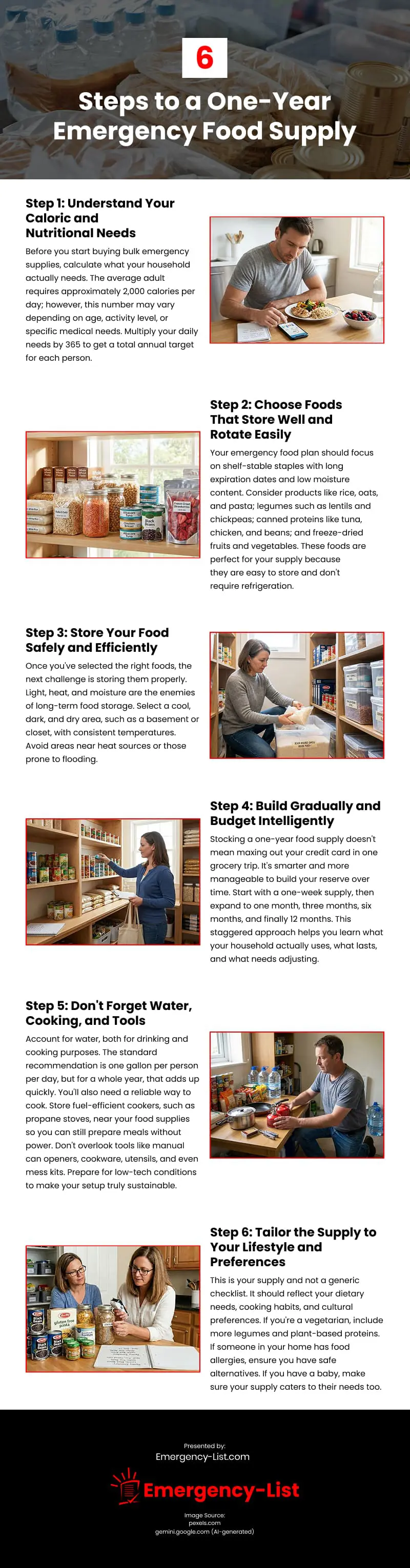
Establishing a one-year emergency food supply is a practical expression of foresight, not fear, and it allows households to remain secure during extended disruptions without wasting money or resources. A thoughtful approach begins with understanding real caloric and nutritional needs, so that food storage supports long-term health and energy. Focusing on shelf-stable foods with long expiration dates, such as grains, legumes, canned proteins, and freeze-dried produce, makes storage manageable and rotation easier. Proper storage is essential, as light, heat, and moisture can shorten shelf life, so supplies should be kept in cool, dark, and dry spaces with stable temperatures. Building the supply gradually helps spread costs and ensures stored foods align with actual eating habits, reducing waste and improving efficiency. A complete plan also accounts for water, cooking methods, and basic tools, recognizing that food alone isn’t enough if power or utilities are unavailable. Reliable cooking equipment, fuel, and simple tools support daily meal preparation under low-tech conditions. Finally, a successful emergency food supply reflects the household’s lifestyle, dietary needs, and preferences, ensuring the plan is sustainable and realistic. When carefully planned and maintained, a one-year food reserve becomes a dependable investment in resilience, preparedness, and long-term peace of mind.
source: https://www.emergency-list.com/strategies-to-build-a-sustainable-one-year-food-supply/
Comments
Download this infographic.