
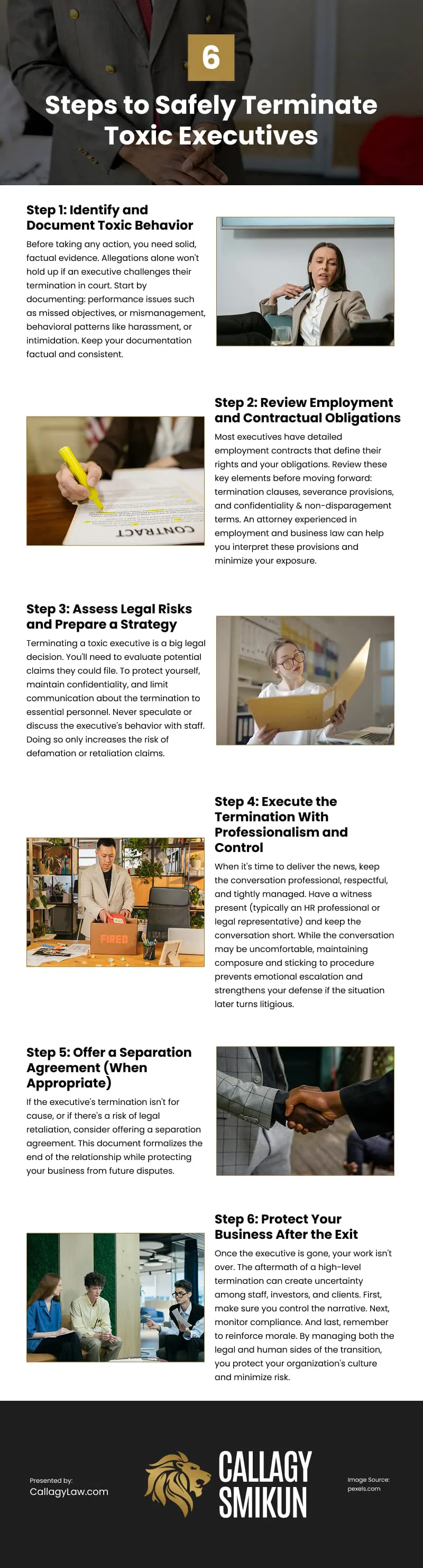
Removing a toxic executive requires a careful balance between protecting your organization and minimizing legal risk. A single high-ranking individual can erode morale, disrupt performance, and jeopardize your company’s reputation if their behavior goes unchecked. Because executives often have access to sensitive data, financial authority, and key relationships, their actions must be deliberate and well-documented. The process begins with gathering clear, factual evidence of harmful behavior or performance issues, ensuring records are consistent and objective rather than emotional or speculative. A thorough review of employment contracts is essential to understand termination rights, severance obligations, and confidentiality requirements, ideally with guidance from experienced legal counsel. Legal risk should be assessed early, with strict limits placed on who is informed and how the situation is discussed to avoid defamation or retaliation claims. When termination occurs, professionalism and control are critical, keeping the conversation brief, respectful, and procedurally sound. In some cases, a separation agreement can help reduce the likelihood of future disputes while formally closing the relationship. After the exit, leadership must focus on stabilizing the organization by managing communication, reinforcing expectations, and restoring employee and stakeholder confidence. Addressing both the legal and human impact of the transition helps protect long-term stability, culture, and trust.
source: https://callagylaw.com/2026/01/20/terminating-toxic-executives-while-avoiding-lawsuits/
Comments
Download this infographic.