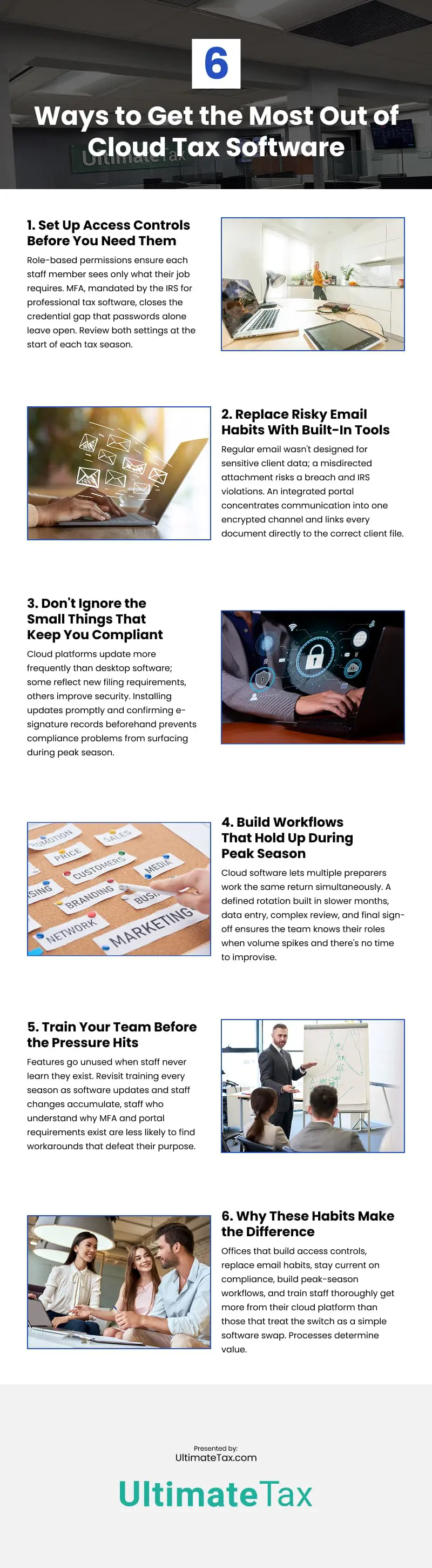
Switching to cloud-based tax software doesn’t automatically make a tax office more efficient; the value comes from how the team uses it. Access controls are the first priority: role-based permissions limit exposure if a login is compromised, and MFA, mandated by the IRS for professional tax software, closes the credential gap that passwords alone leave open. Regular email is one of the most common security risks in a tax office; an integrated client portal consolidates all communication into a single encrypted channel and links every document directly to the correct client file, eliminating the need for staff to dig through inboxes. Cloud platforms update more frequently than desktop software, and installing those updates promptly, along with confirming that e-signature records are complete, prevents compliance problems from surfacing during peak season. The workflow infrastructure built during slower months is what carries a practice through the busiest weeks: multiple preparers working the same return simultaneously, with a defined rotation for data entry, review, and sign-off, means volume spikes don’t create chaos. Training the team before pressure hits ensures features get used as intended, staff who understand why MFA and portal requirements exist are far less likely to find workarounds that defeat their purpose. Offices that build these habits get significantly more from their cloud platform than those that treat the switch as a simple software swap.
source: https://ultimatetax.com/blog/how-to-get-the-most-out-of-cloud-tax-software/
Comments
Download this infographic.