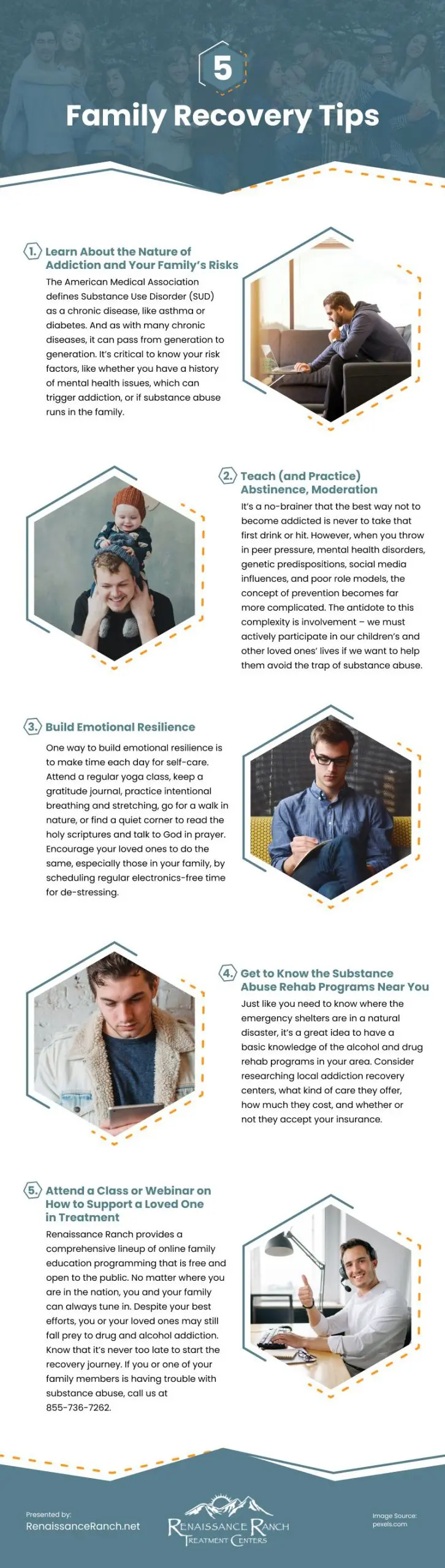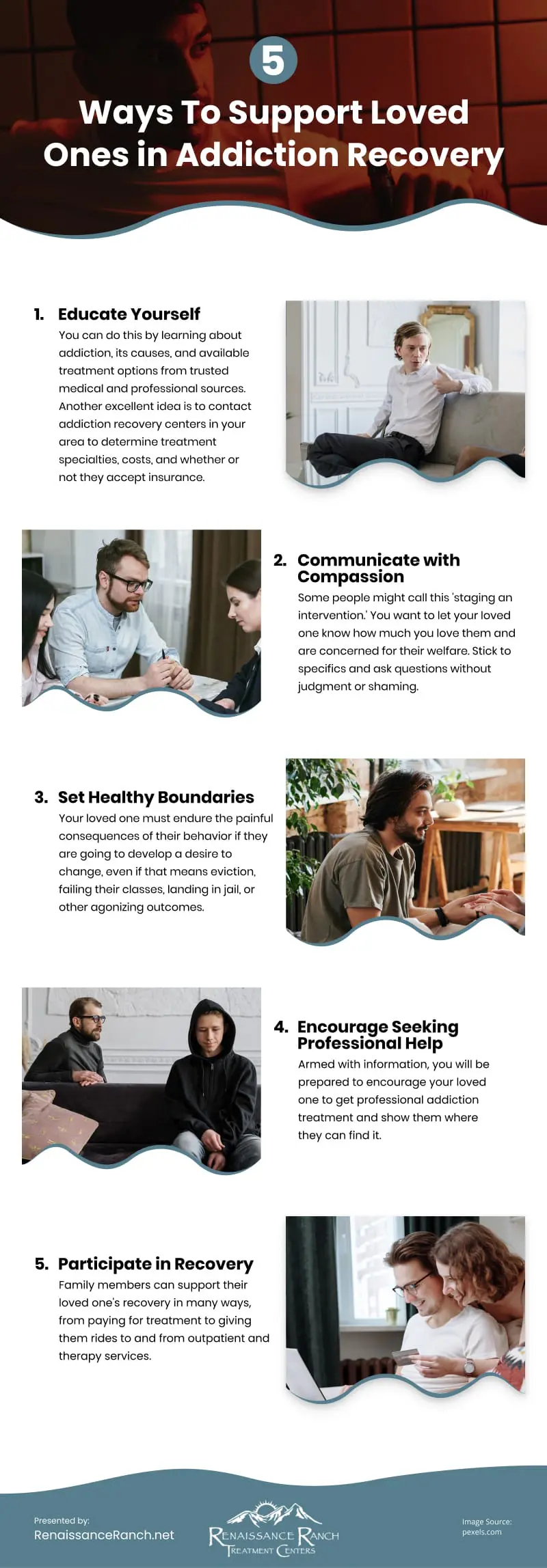
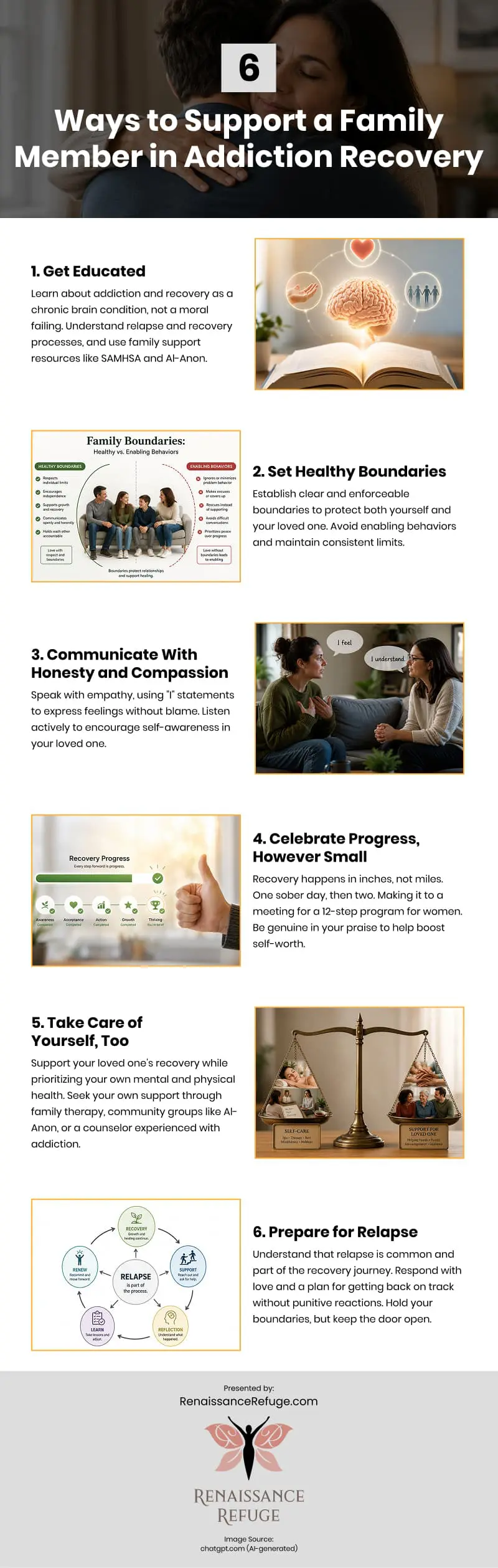
Supporting a loved one through addiction recovery requires patience, consistency, and a healthy understanding of what meaningful support truly looks like. Recovery is rarely a straight path, and family involvement can play a powerful role in helping someone maintain long-term sobriety. One of the most important first steps is learning about addiction as a chronic condition rather than viewing it through shame or blame, which helps families respond with greater empathy and understanding. Healthy boundaries are equally essential, as support should not become enabling or self-sacrificing. Clear, respectful limits protect both the individual in recovery and the people supporting them. Honest and compassionate communication can strengthen trust, especially when conversations focus on feelings and encouragement rather than criticism. Recognizing and celebrating small milestones also matters, as recovery often progresses gradually and each step forward helps rebuild confidence and self-worth. At the same time, caregivers must prioritize their own emotional and physical well-being through counseling, support groups, or personal self-care practices. Preparing emotionally for setbacks, including possible relapse, can help families respond with stability rather than panic or punishment. By combining education, boundaries, empathy, and ongoing support, families create a healthier environment that encourages healing, accountability, and resilience while also protecting their own well-being throughout the recovery journey.
source: https://renaissancerefuge.com/how-to-support-your-family-member-in-addiction-recovery/
Comments
Download this infographic.