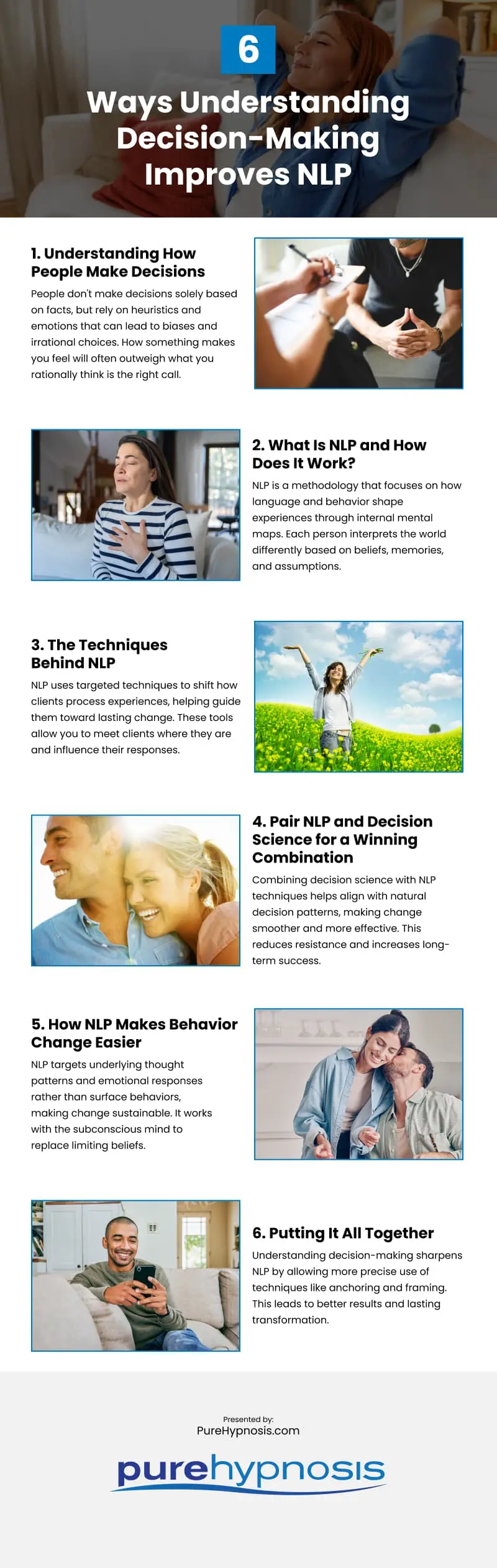
Understanding how people make decisions is an important part of becoming an effective Neuro-linguistic Programming practitioner, especially for those pursuing deeper training or an NLP certification. Human decisions are often shaped less by pure logic and more by emotions, habits, mental shortcuts, and personal interpretations of experiences. Behavioral economics helps explain these patterns by showing how biases and emotional responses influence choices, even when people believe they are acting rationally. NLP complements this understanding by focusing on how language, thought patterns, beliefs, and internal mental maps shape behavior and perception. Because people interpret experiences differently, NLP techniques are designed to work within an individual’s existing patterns rather than forcing change from the outside. Techniques such as anchoring, reframing, and guided language patterns help clients process experiences differently and respond more constructively. When behavioral economics and NLP are combined, practitioners can align communication and coaching strategies with the way the mind naturally operates, making change feel less forced and more sustainable. This approach often reduces resistance because it addresses subconscious patterns and emotional drivers rather than focusing solely on surface-level behaviors. By understanding how people emotionally evaluate situations and make decisions, NLP practitioners can apply techniques with greater precision and effectiveness. The result is a more personalized process that supports lasting behavior change, improved self-awareness, and stronger long-term outcomes for clients seeking personal growth, coaching, or therapeutic support.
source: https://purehypnosis.com/why-nlp-works-better-when-you-understand-how-people-decide/
Comments
Download this infographic.