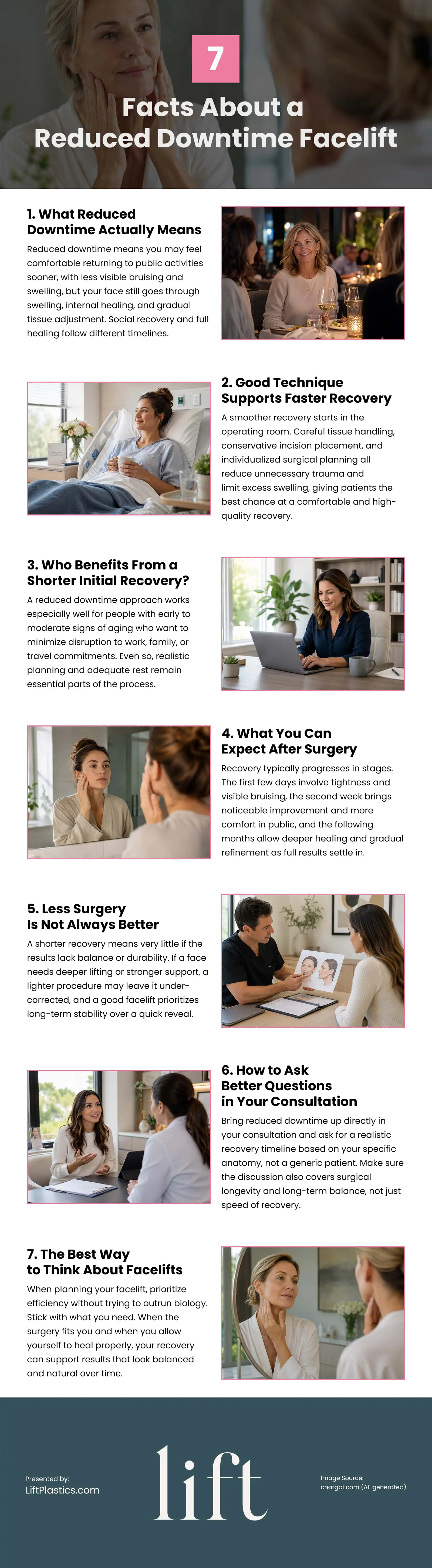
A reduced downtime facelift can be a real advantage, but understanding what that phrase actually means is essential before making any decisions. Reduced downtime refers to a more comfortable early recovery period with less visible bruising and swelling, not a shortcut through the healing process itself. Your face still goes through internal healing and gradual tissue adjustment regardless of the approach, and social recovery and full healing always follow different timelines. The foundation of a smoother recovery is good surgical technique, careful tissue handling, conservative incision placement, and individualized planning that reduces unnecessary trauma from the start. This approach tends to work best for patients with early to moderate signs of aging who want to minimize disruption to their daily routine, though realistic expectations and adequate rest remain essential, regardless of how refined the technique. Recovery itself typically unfolds in stages: the first few days involve the most visible signs of surgery, the second week brings noticeable improvement, and the months that follow allow deeper healing and gradual refinement as full results settle in. It’s also important to remember that less surgery is not always better. If your face requires deeper lifting or stronger structural support, a lighter procedure may leave you under-corrected, and a good facelift always prioritizes long-term balance and durability over a quick reveal. When consulting with a surgeon, ask directly about a realistic recovery timeline for your specific anatomy and make sure the conversation covers longevity and long-term results, not just speed.
source: https://liftplastics.com/what-is-a-reduced-downtime-facelift/
Comments
Download this infographic.