
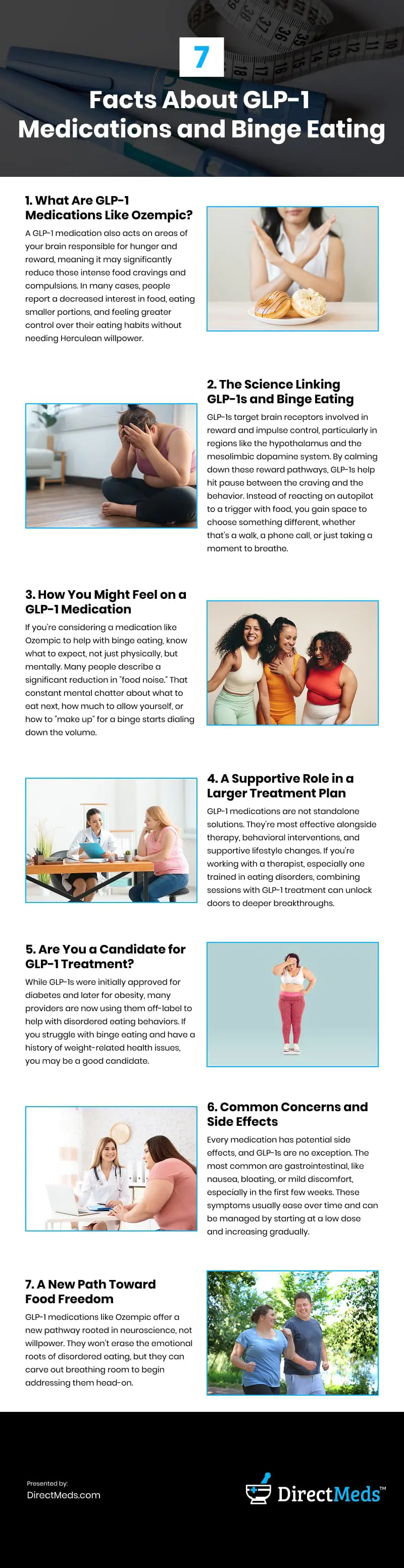
GLP-1 prescription medications, such as Ozempic, offer a promising approach for managing binge eating by targeting brain pathways that control hunger, reward, and impulse. Rather than relying solely on willpower, these medications act on the hypothalamus and mesolimbic dopamine system to reduce intense food cravings and compulsions, helping individuals eat smaller portions and feel more in control of their habits. Many users report a noticeable reduction in the constant mental chatter about food, often described as dialing down the “food noise,” which allows space to respond differently to triggers. While GLP-1s are not standalone solutions, they are most effective when combined with therapy, behavioral interventions, and supportive lifestyle changes, enabling deeper breakthroughs in addressing emotional and psychological aspects of disordered eating. Originally approved for diabetes and obesity, GLP-1s are now increasingly used off-label to support individuals struggling with binge eating and weight-related health concerns. Common side effects, typically gastrointestinal, such as nausea or bloating, usually ease over time with gradual dosing. By reducing cravings and enhancing self-regulation, GLP-1 medications create a neurobiologically informed pathway toward food freedom, giving individuals a practical tool to regain control, complement other treatments, and make lasting, sustainable changes in their eating patterns.
source: https://directmeds.com/can-ozempic-and-other-glp-1-medications-help-manage-binge-eating/
Comments
Download this infographic.