
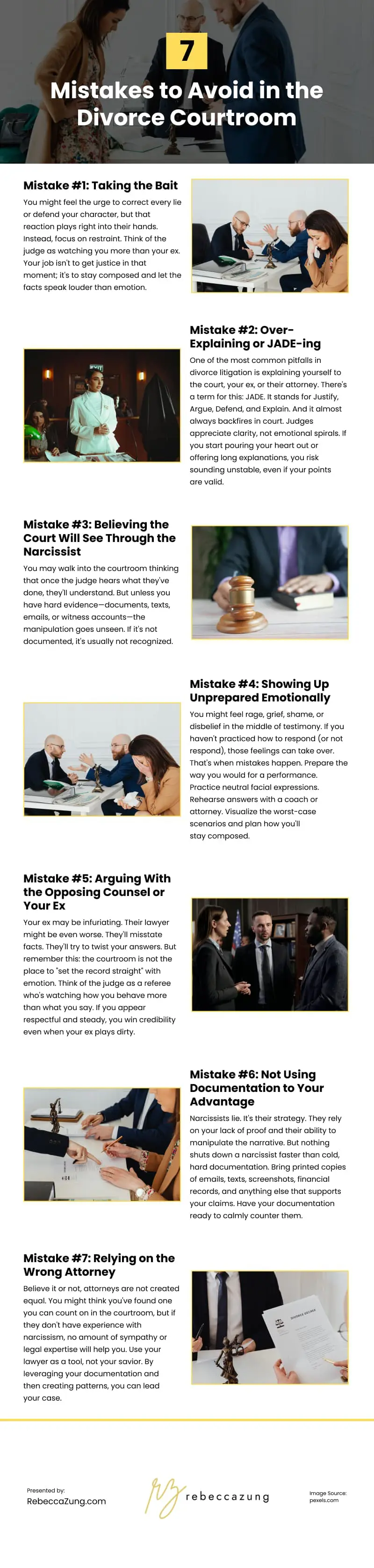
Divorce becomes even more overwhelming when conflict escalates into the courtroom, where emotional reactions can jeopardize credibility. The biggest trap is reacting to provocation—narcissistic exes thrive on baiting you into outbursts that make you look unstable, so staying calm allows the judge to see you as the steady one. Over-explaining is another misstep that backfires; when you slip into justifying, arguing, defending, or explaining, your message gets lost in emotional noise, and judges favor concise, fact-based communication. Many people assume that the court will naturally see through manipulation, but without clear documentation—such as texts, emails, financial records, or witness statements—claims often go unrecognized. Emotional unpreparedness is equally risky, as unmanaged anger, grief, or panic in the moment can disrupt your testimony, making it essential to rehearse responses and practice neutrality. Arguments with your ex or their attorney only weaken your position, but steady, respectful behavior strengthens your credibility even when the other side twists facts. The strongest defense is evidence, not emotion, and presenting it calmly helps shut down manipulation. And while having a strong attorney matters, relying on one who understands narcissistic patterns is crucial so you can lead your case with strategy rather than hope.
source: https://www.rebeccazung.com/7-mistakes-to-avoid-in-the-divorce-courtroom/
Comments
Download this infographic.