
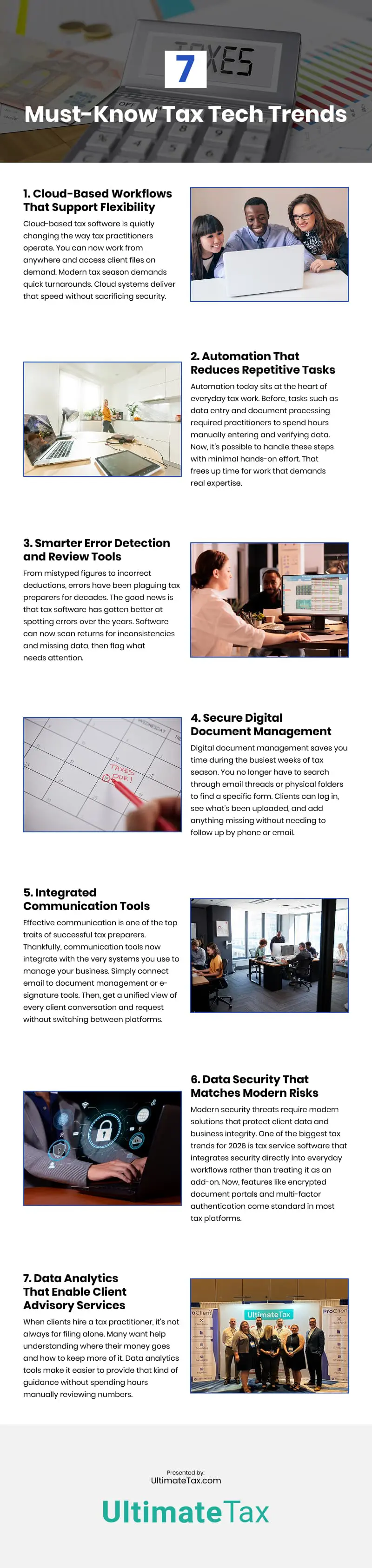
The tax industry is evolving rapidly as technology reshapes how services are delivered and how firms operate each day. Cloud-based workflows now allow practitioners to access files securely from anywhere, improving flexibility and speeding up turnaround times during demanding tax seasons. Automation has reduced the burden of repetitive tasks like data entry and document processing, freeing professionals to focus on strategic analysis and client advisory work. Advanced error detection tools scan returns for inconsistencies, missing information, and potential deduction issues, helping improve accuracy and reduce costly mistakes. Secure digital document management systems streamline collaboration by giving clients direct access to upload, review, and track required forms without relying on lengthy email chains. Integrated communication tools further enhance efficiency by connecting email, e-signatures, and document platforms into a unified system, creating a seamless client experience. As cybersecurity risks grow more sophisticated, modern tax software increasingly embeds protection directly into daily workflows through encrypted portals and multi-factor authentication. Beyond compliance and filing, data analytics tools empower firms to offer deeper financial insights, transforming traditional tax preparation into ongoing advisory services. Embracing these technological shifts enables tax service businesses to remain competitive, efficient, and aligned with rising client expectations in a fast-changing landscape.
source: https://ultimatetax.com/blog/7-tax-tech-trends-every-tax-services-business-should-embrace/
Comments
Download this infographic.