
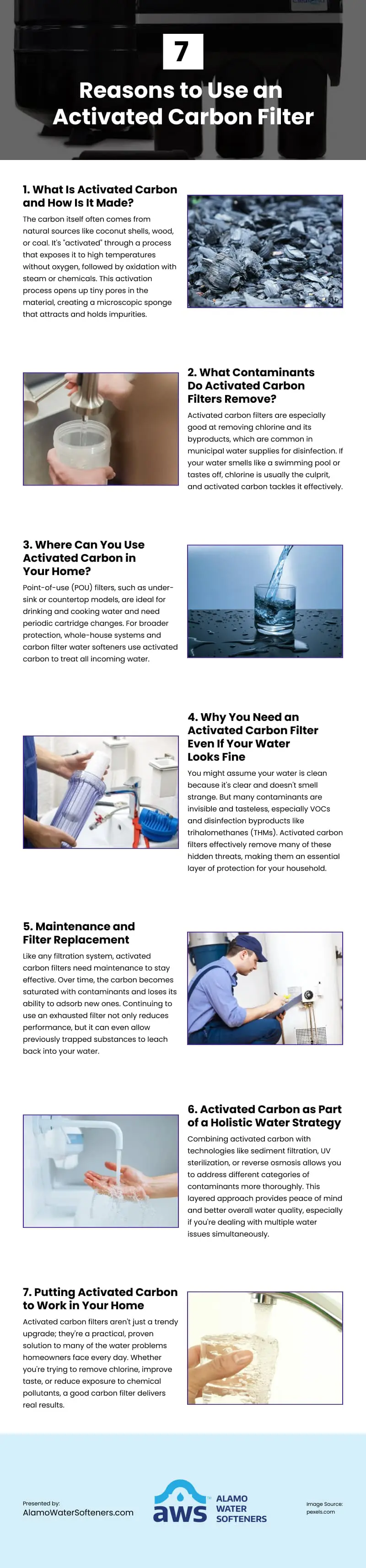
Activated carbon filters are an effective, affordable solution for improving your home’s water quality. Made from natural sources like coconut shells, wood, or coal, activated carbon is processed to create tiny pores that act as a sponge, trapping impurities. These filters are particularly useful for removing chlorine and its byproducts, which can cause unpleasant tastes and odors in municipal water supplies. Activated carbon filters can be used in various ways, from point-of-use models for drinking and cooking water to whole-house systems that treat all incoming water. Even if your water looks clear and odorless, contaminants like VOCs and disinfection byproducts (e.g., trihalomethanes) can still be present, making activated carbon filters a valuable addition to your home. However, regular maintenance is essential; the filter becomes saturated and less effective over time. Replacing the filter periodically ensures optimal performance. For a more comprehensive solution, combining activated carbon with other technologies like sediment filtration, UV sterilization, or reverse osmosis addresses a wider range of contaminants, providing a holistic approach to water quality. Activated carbon filters are a proven, practical choice for homeowners looking to improve water taste, reduce chemical exposure, and ensure cleaner, safer water.
source: https://www.alamowatersofteners.com/how-activated-carbon-filters-work-and-why-you-need-one/
Comments
Download this infographic.