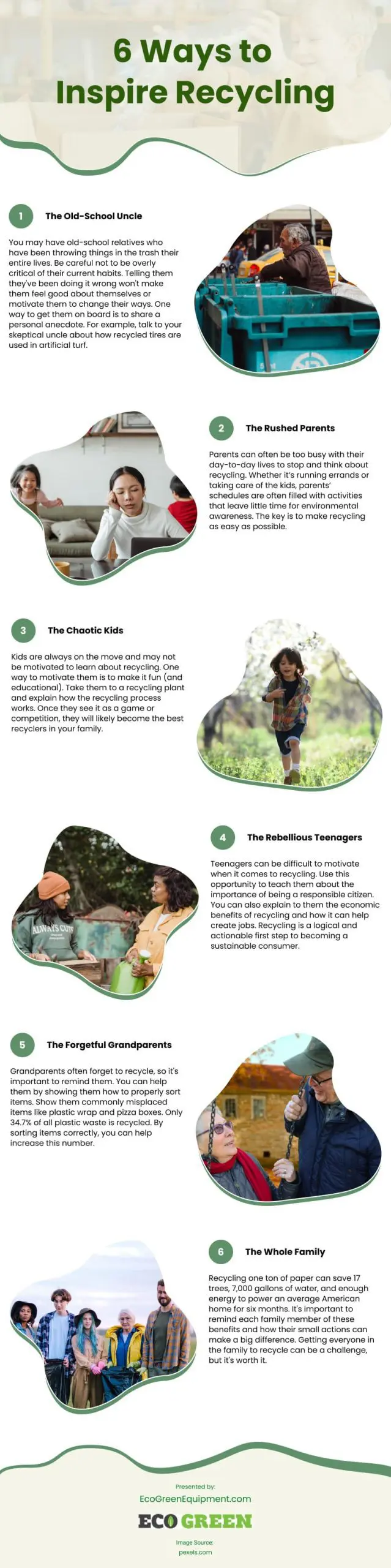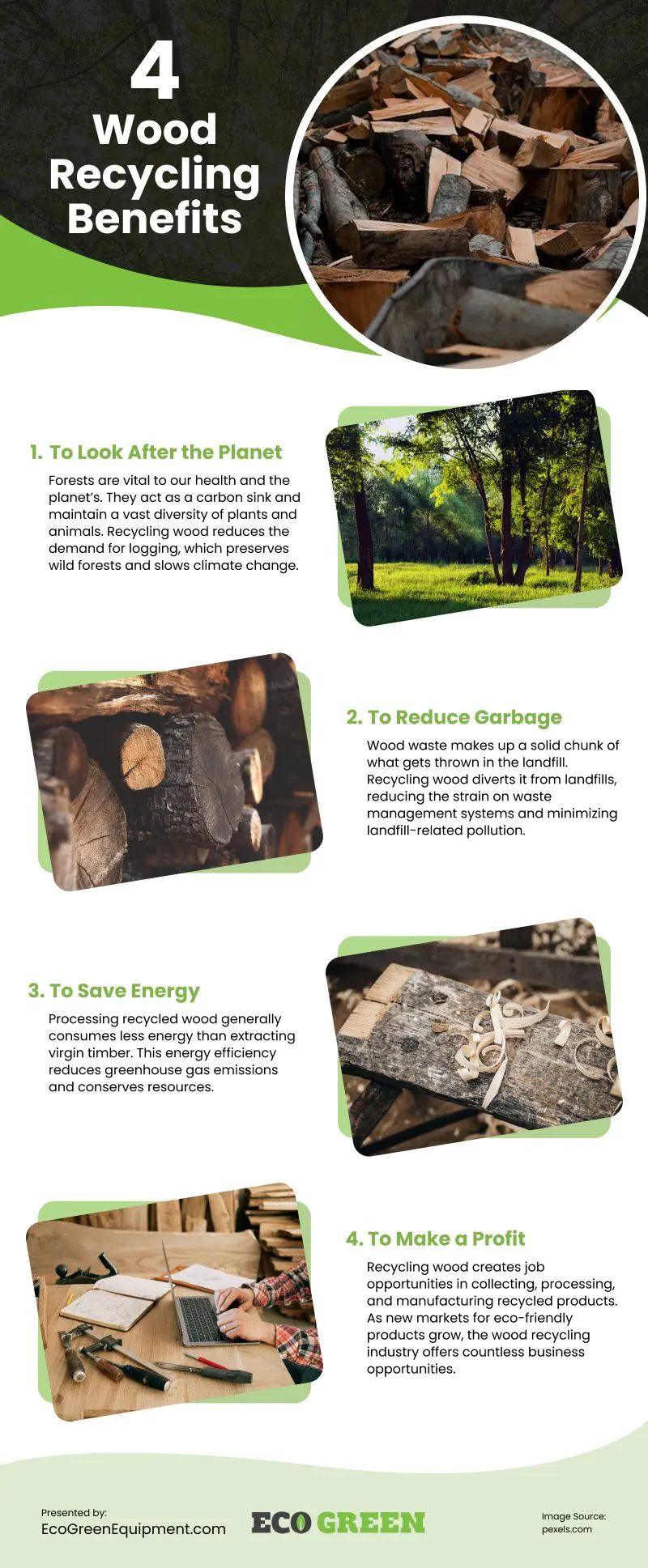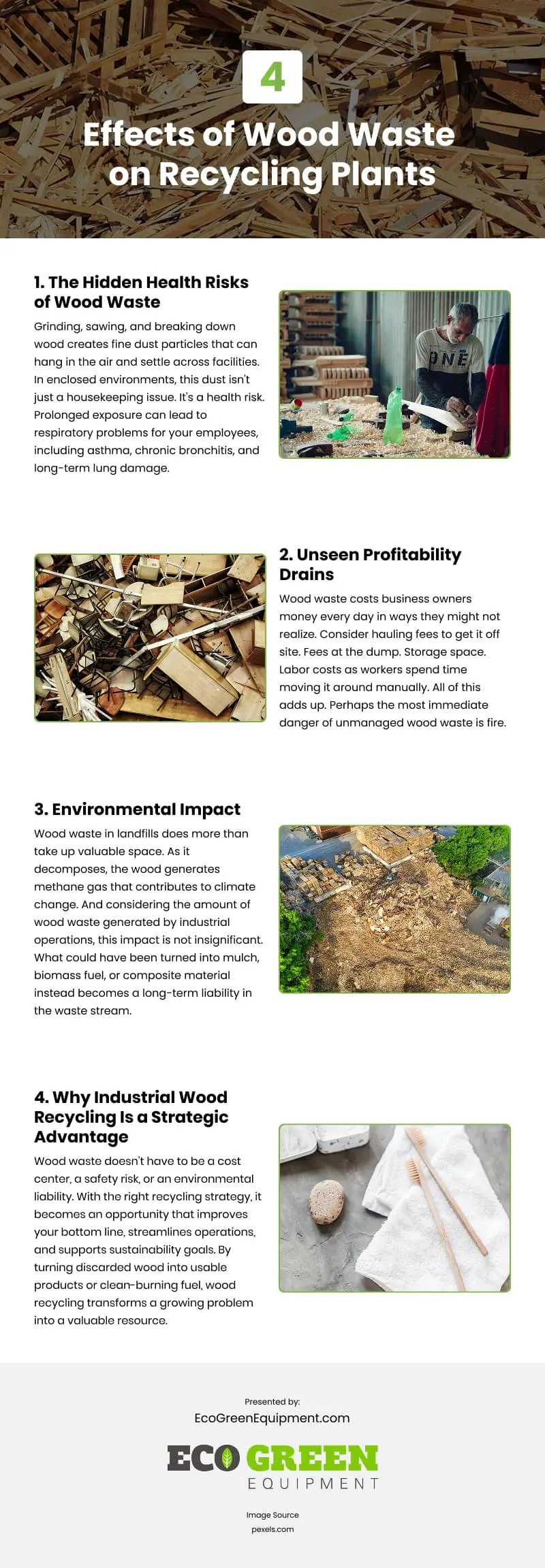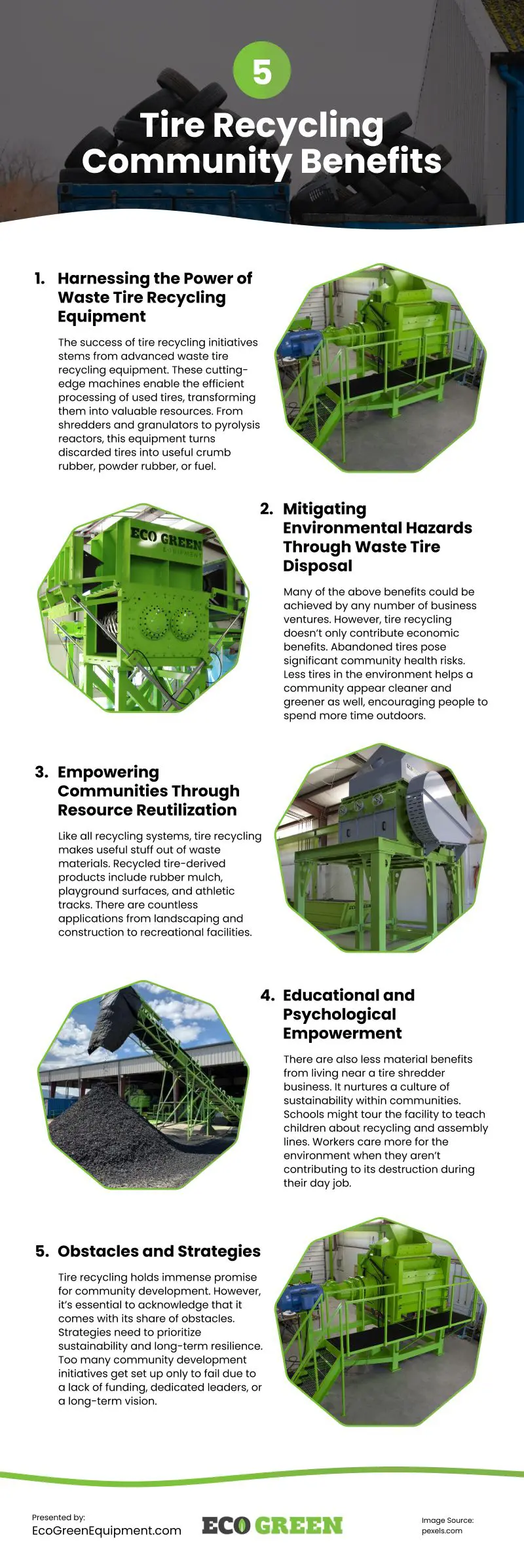
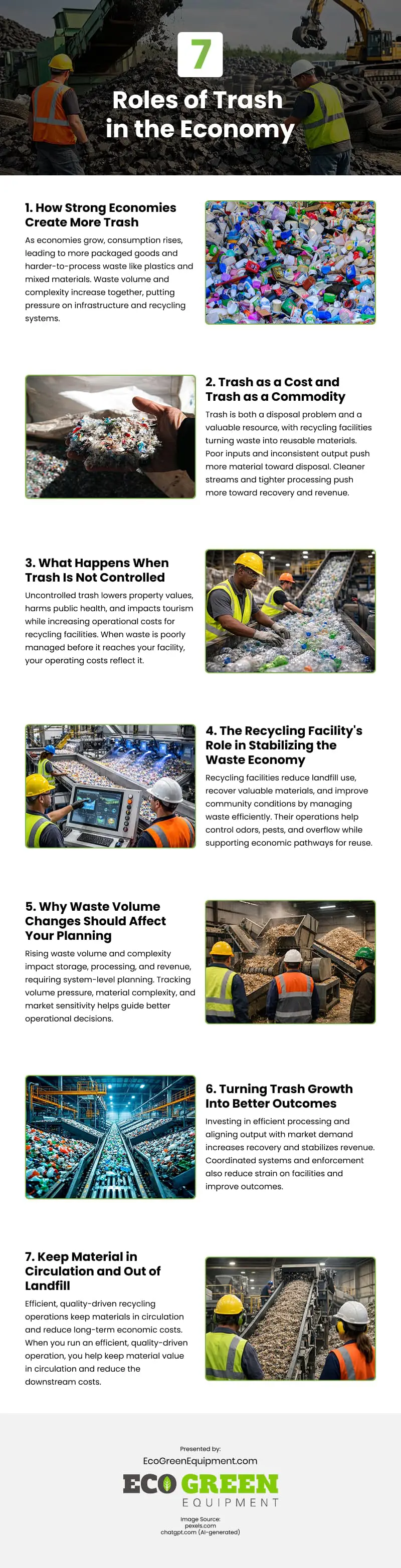
Economic growth often drives increased consumption, which in turn leads to larger, more complex waste streams. As communities purchase more packaged goods and disposable products, recycling systems and waste infrastructure face growing pressure to process materials efficiently. Waste is not only a disposal challenge but also a potential economic resource, as recycling facilities recover valuable materials and return them to productive use. Cleaner recycling streams and better sorting processes help maximize recovery value, while contaminated or poorly managed waste increases disposal costs and reduces efficiency. When trash is not properly managed, communities can experience declining property values, public health concerns, environmental strain, and rising operational expenses for cleanup and landfill management. Recycling facilities play a critical role in stabilizing this system by reducing reliance on landfills, managing odors and overflow, supporting local jobs, and creating economic opportunities through material reuse. As waste volume and material complexity continue to rise, long-term planning becomes essential for facilities managing storage, processing, and market fluctuations. Investments in efficient recycling operations, stronger coordination, and better waste management practices can improve recovery rates while reducing strain on public infrastructure. Keeping materials in circulation instead of sending them to landfills helps strengthen local economies, reduce environmental impact, and create more sustainable systems that support both communities and long-term economic growth.
source: https://ecogreenequipment.com/the-role-of-trash-in-the-economy/
Comments
Download this infographic.