
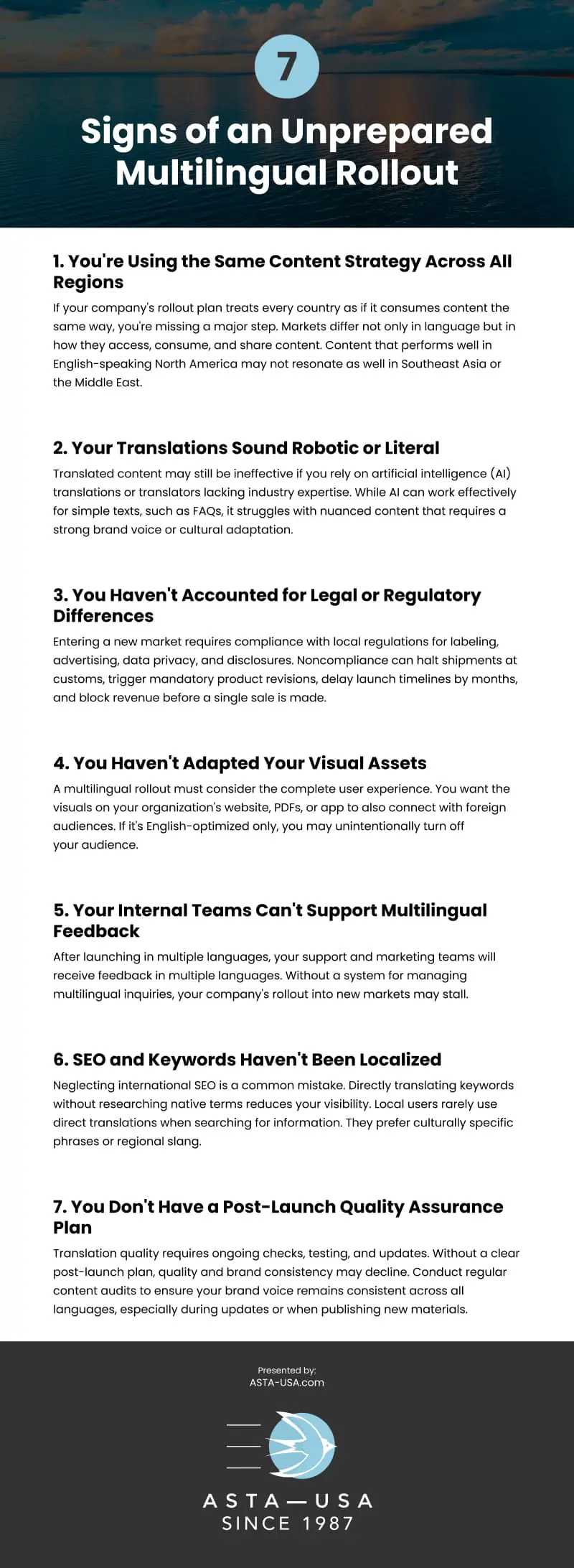
Launching into global markets too quickly can damage brand reputation and stall revenue if messaging fails to connect across cultures. Successful multilingual expansion requires more than direct translation; it demands alignment in tone, formatting, compliance, visuals, and search strategy for each specific region. Treating every country as though audiences consume content the same way overlooks critical cultural and behavioral differences that shape engagement. Literal or AI-generated translations may handle basic text but often miss nuance, brand voice, and cultural context, resulting in robotic messaging that weakens credibility. Legal and regulatory requirements also vary widely, and overlooking local rules around labeling, advertising, privacy, or disclosures can delay shipments and disrupt launch timelines. Visual elements must be adapted as thoughtfully as written content to ensure the entire user experience resonates with local audiences. After launch, internal teams need systems to manage multilingual feedback efficiently, or customer support gaps may emerge. International SEO requires localized keyword research rather than direct translation to maintain visibility in regional search results. Finally, maintaining quality demands ongoing review, testing, and updates to preserve brand consistency. Thoughtful preparation and professional multilingual support ensure your global rollout builds trust, relevance, and sustainable growth.
source: https://asta-usa.com/7-signs-your-multilingual-rollout-isnt-market-ready/
Comments
Download this infographic.