
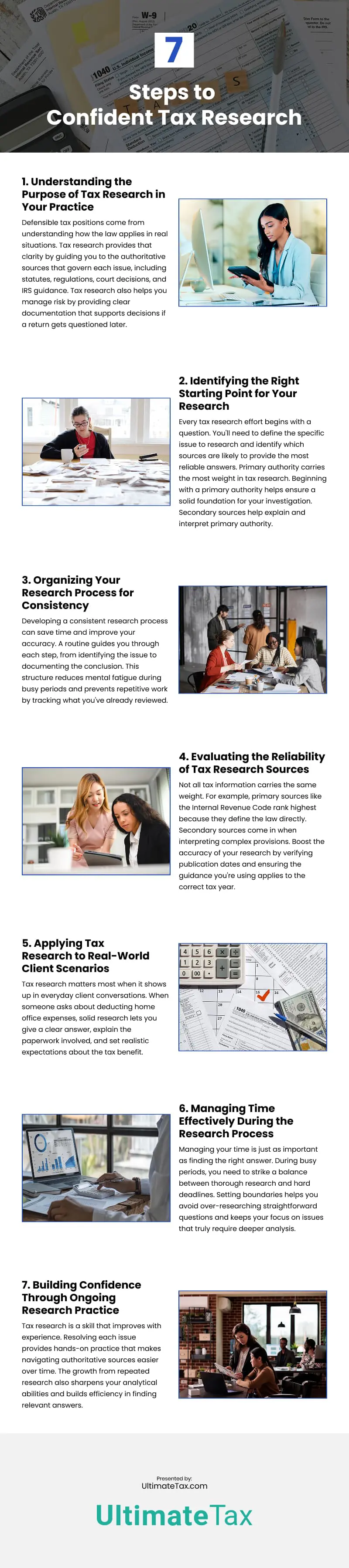
Tax research is a foundational skill for delivering accurate, defensible work and for guiding clients through complex, often uncertain tax situations. It supports clear answers to questions about deductions, income treatment, and compliance, while reducing risk by ensuring positions are grounded in authoritative guidance that can withstand scrutiny. Effective tax research starts with clearly defining the issue at hand and identifying the most relevant sources, prioritizing primary authority such as statutes, regulations, court rulings, and official IRS guidance, which carry the greatest legal weight. Secondary sources play an important supporting role by interpreting and explaining these rules, but they should reinforce, not replace, primary authority. Consistency in the research process is critical, as a structured approach helps practitioners work efficiently, avoid redundant efforts, and maintain thorough documentation of conclusions. Evaluating the reliability and timeliness of sources is equally important, since outdated or misapplied guidance can lead to errors. The real value of tax research emerges in client interactions, where well-supported answers build trust and set realistic expectations. Managing time effectively ensures research remains proportionate to the issue’s complexity, especially during busy seasons. With regular practice, tax research becomes faster, more intuitive, and a powerful tool for professional confidence and sound judgment.
source: https://ultimatetax.com/blog/the-tax-professionals-guide-to-confident-tax-research/
Comments
Download this infographic.