
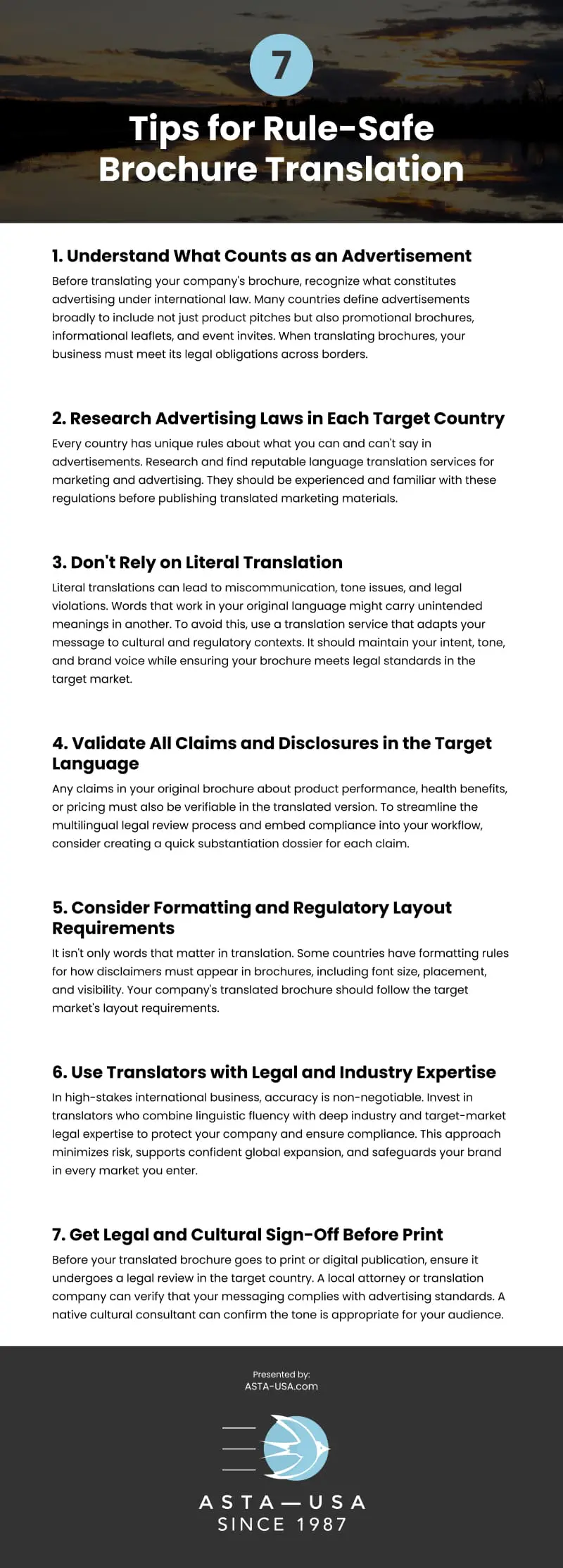
Translating brochures for international audiences can help businesses expand into new markets, but success depends on more than accurate language conversion. Marketing materials must also comply with the advertising laws and cultural expectations of each target country. In many regions, brochures, leaflets, and promotional materials are legally considered advertisements, which means they are subject to specific rules about claims, disclosures, and presentation. Because of this, businesses should research the advertising standards in every market they plan to enter and avoid relying on literal translations that may distort tone, meaning, or compliance. Effective brochure translation requires adapting the content to both legal and cultural contexts while preserving the brand’s original message. All claims related to pricing, performance, or benefits must remain verifiable in the translated version, and required disclaimers must be displayed in accordance with local formatting rules, including placement, visibility, and font size. This is why companies benefit from working with translators who have both language skills and expertise in the relevant industry and legal environment. Before finalizing any translated brochure for print or digital use, it is also wise to seek legal review and cultural feedback in the target country. Taking these steps helps reduce risk, protect brand reputation, and ensure marketing materials connect effectively and appropriately with international audiences.
source: https://asta-usa.com/translating-brochures-without-breaking-advertising-rules/
Comments
Download this infographic.