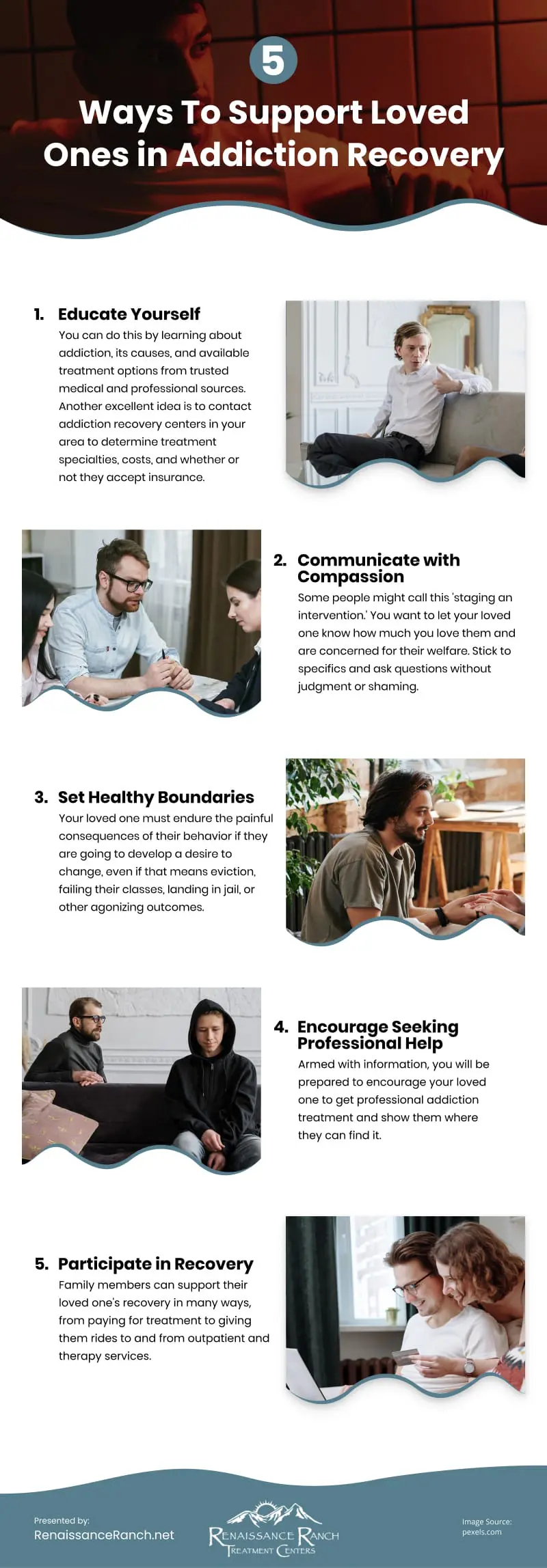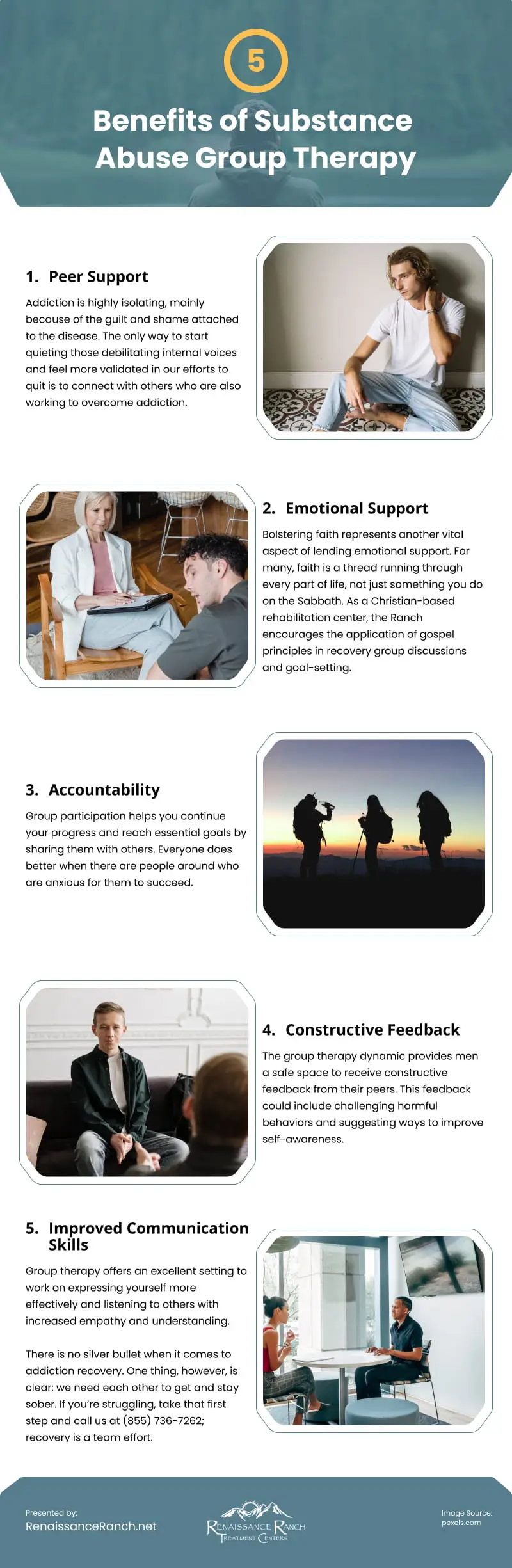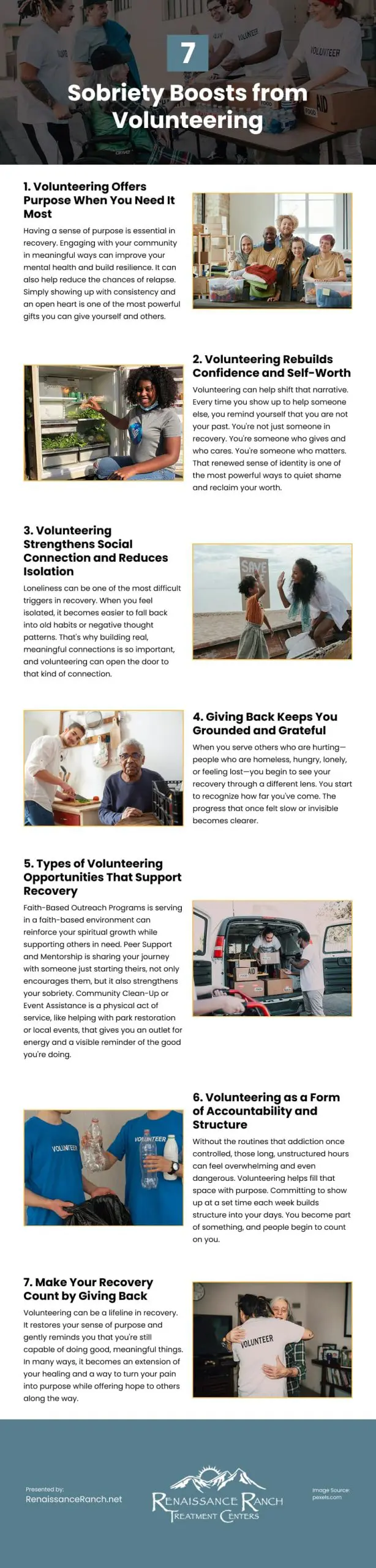
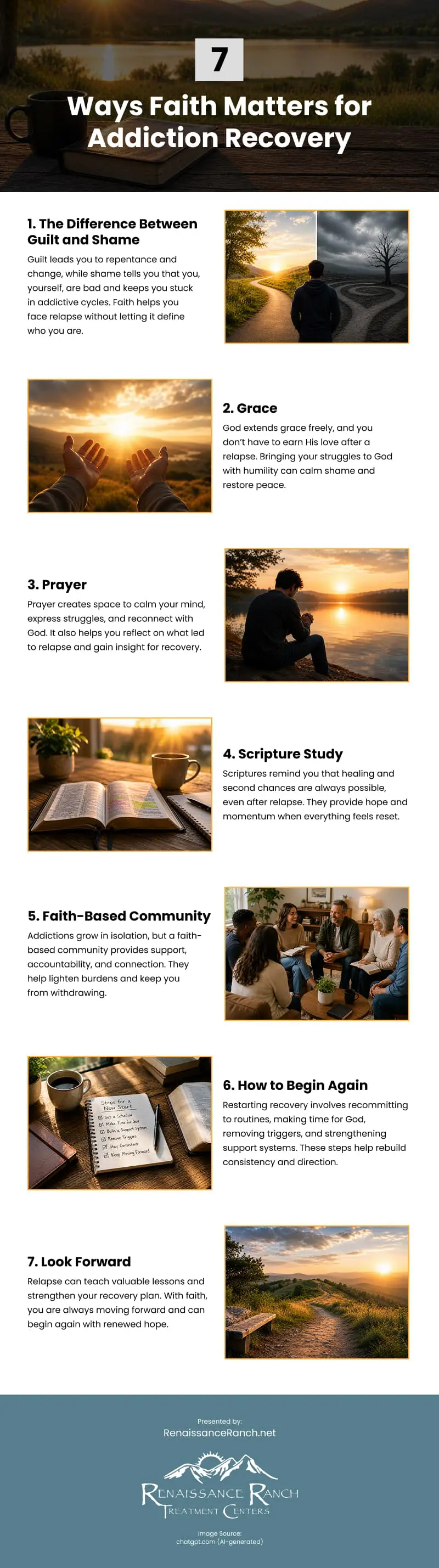
Relapse can bring overwhelming emotions like shame, embarrassment, defeat, and discouragement, often making it feel as though all progress has been lost. Faith can provide stability during these difficult moments by reminding you that a setback does not define your identity or erase the work you have already done in recovery. An important part of healing is understanding the difference between guilt and shame. Guilt can motivate change and encourage accountability, while shame often convinces a person that they are fundamentally broken, which can deepen addictive patterns and isolation. Faith offers a perspective rooted in grace, forgiveness, and the belief that healing remains possible even after failure. Prayer can create space to calm the mind, process emotions, and reconnect spiritually while also helping identify triggers, stressors, or behaviors that contributed to relapse. Scripture study can reinforce hope by reminding individuals that second chances, growth, and restoration are possible, even when recovery feels difficult. A faith-based community also plays a valuable role because addiction often thrives in isolation, while supportive relationships provide encouragement, accountability, and connection during challenging periods. Moving forward after relapse often involves recommitting to recovery routines, strengthening support systems, removing triggers, and making intentional time for spiritual practices. Rather than viewing relapse as the end of recovery, faith can help individuals see it as an opportunity to learn, adjust, and continue moving forward with renewed purpose, humility, and hope.
source: https://renaissanceranch.net/why-faith-matters-for-your-addiction-recovery/
Comments
Download this infographic.