
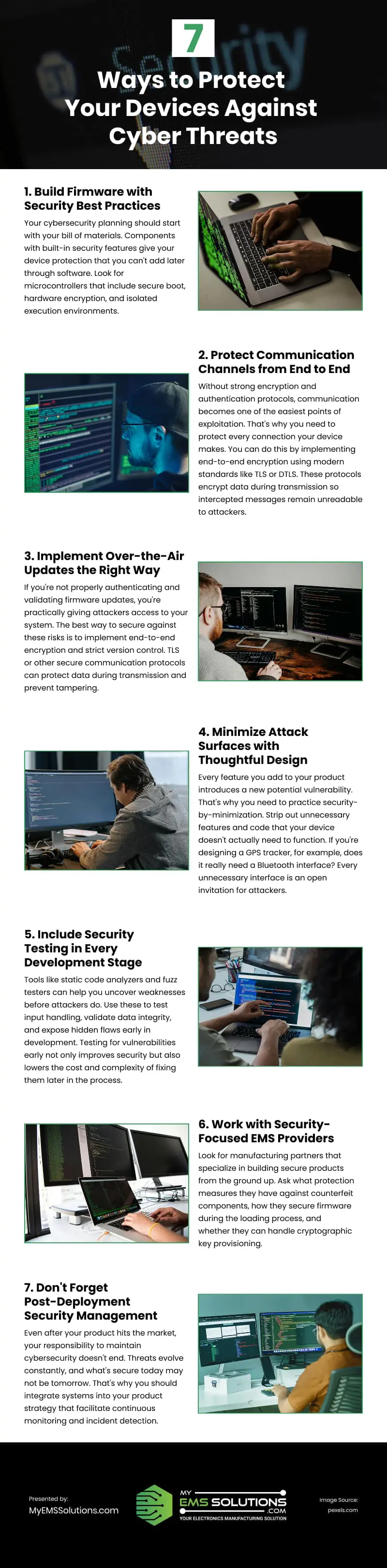
Security in electronics design works best when it’s built in from the start, not added as an afterthought. When teams focus solely on functionality—like PCB assembly, component selection, or firmware flow—they often overlook vulnerabilities already embedded in the architecture. As cyber threats evolve, attackers look for unprotected firmware, weak communication channels, unnecessary interfaces, and outdated update mechanisms to exploit. Strong security begins with selecting components that offer secure boot, hardware encryption, and isolated execution, ensuring your device has protection at the hardware level. Safeguarding communication with end-to-end encryption ensures that data remains unreadable, even if intercepted, while properly authenticated and validated over-the-air updates prevent malicious firmware from being introduced unnoticed. Reducing attack surfaces through minimalistic design keeps only the features your device truly needs, lowering exposure and making the system easier to secure. Continuous security testing—utilizing static code analysis, fuzzing tools, and integrity validation—helps identify weaknesses early, saving time and cost while enhancing the product’s resilience. Partnering with EMS providers who prioritize secure component sourcing, key provisioning, and protected firmware handling adds another crucial layer of defense. And once your device is deployed, ongoing monitoring, timely updates, and proactive threat detection ensure your product stays secure long after it reaches the market.
source: https://www.myemssolutions.com/build-cybersecurity-into-your-electronics-from-the-ground-up/
Comments
Download this infographic.