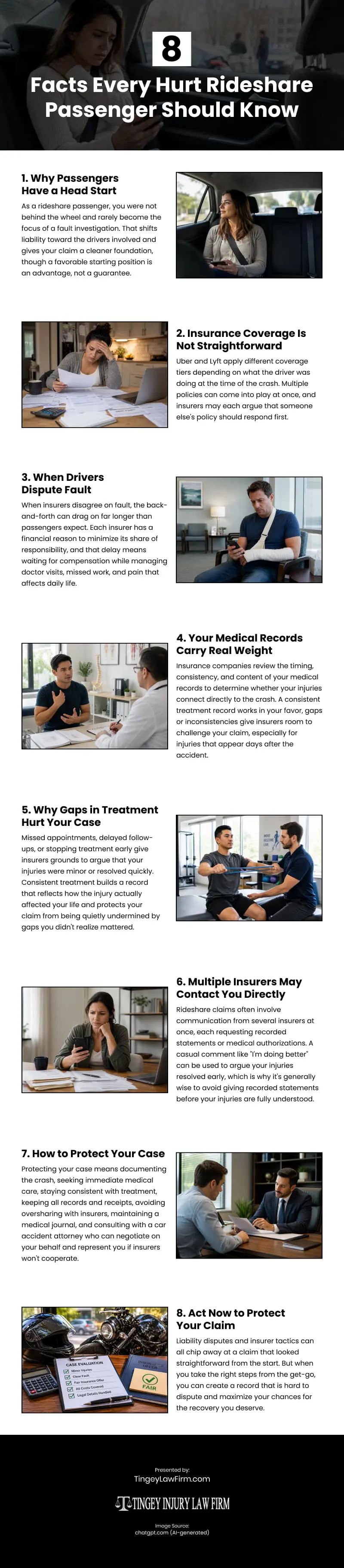
Being injured as a rideshare passenger puts you in a stronger position than most accident victims because fault rarely centers on you, but that advantage only holds if you understand how the claims process actually works and take the right steps to protect it. Uber and Lyft apply layered insurance coverage that shifts depending on what the driver was doing at the time of the crash, and when multiple policies come into play, insurers can spend significant time arguing over who pays first while your medical needs continue. When drivers dispute fault, that back-and-forth extends further, delaying compensation while you manage doctor visits, missed work, and pain that affects daily life. Medical documentation becomes the backbone of your claim, insurance companies review the timing, consistency, and content of your records to determine whether your injuries connect to the crash, and gaps created by missed appointments or delayed follow-up give them grounds to minimize what you are owed. Recorded statements requested by insurers carry similar risk, since casual comments about feeling better can be used to argue that injuries resolved early before their full impact was understood. Taking the right steps from the start, documenting the crash, seeking immediate care, staying consistent with treatment, keeping all records and receipts, maintaining a medical journal, and working with an experienced car accident attorney, builds a record that is hard to dispute. Liability disputes and insurer tactics can quietly chip away at even a strong claim, but early, organized action maximizes your chances of the full recovery you deserve.
source: https://tingeylawfirm.com/hurt-as-an-uber-or-lyft-passenger-heres-what-you-need-to-know/
Comments
Download this infographic.