
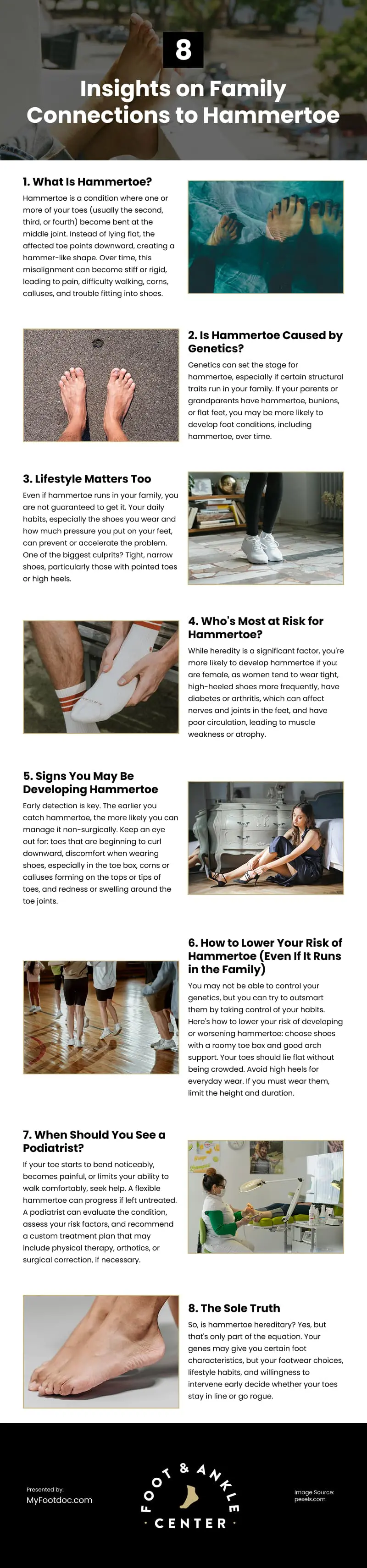
Hammertoe develops when one or more toes bend downward at the middle joint, creating a hammer-like shape that can lead to stiffness, pain, corns, and difficulty walking. While genetics can predispose you to the condition—especially if your family has a history of bunions, flat feet, or similar structural traits—daily habits play an equally important role. Tight, narrow, or high-heeled shoes increase pressure on the toes and can accelerate misalignment, making footwear choices one of the biggest controllable risk factors. Women, people with diabetes or arthritis, and individuals with poor circulation face a higher likelihood of developing hammertoe due to joint, nerve, and muscle challenges. Early warning signs include toes beginning to curl downward, discomfort in the toe box, and the formation of corns or calluses. Catching it early improves the chances of managing the condition without surgery. Choosing supportive shoes with roomy toe boxes, limiting heel height, and maintaining healthy foot mechanics helps lower your risk—even if it runs in your family. If pain, visible bending, or walking difficulties arise, a podiatrist can provide targeted care, from orthotics to therapy or surgical options when necessary. Ultimately, heredity may load the foot-shape “dice,” but your habits determine the outcome.
source: https://myfootdoc.com/is-hammertoe-hereditary/
Comments
Download this infographic.