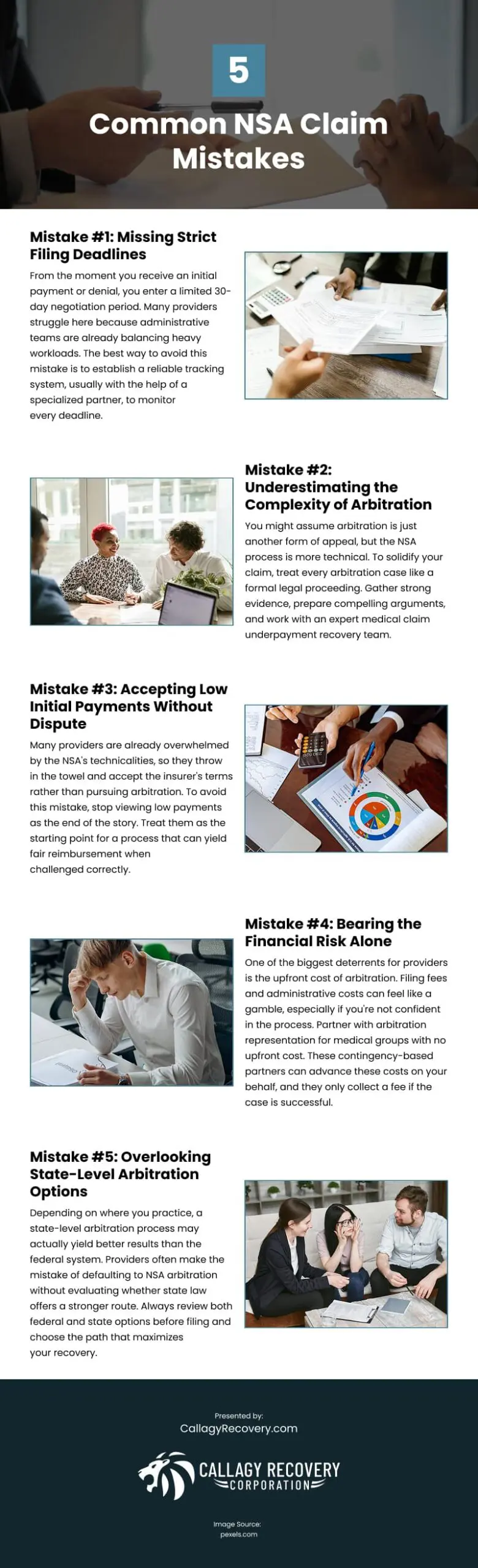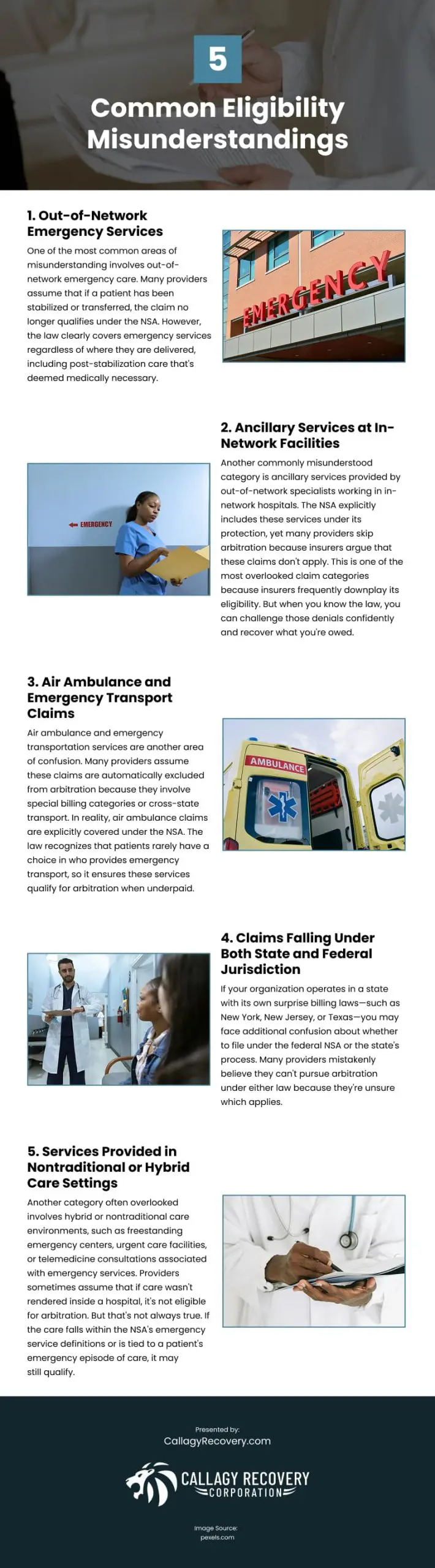
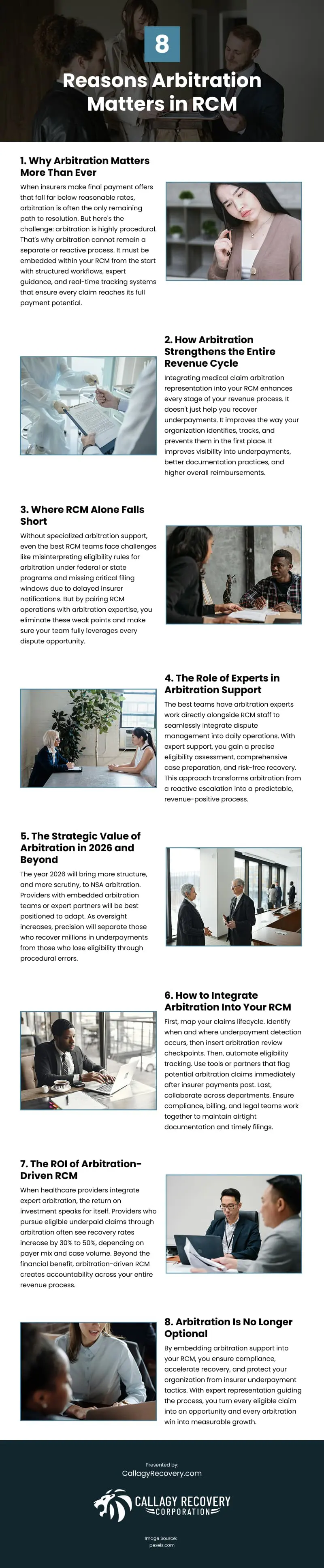
Relying on revenue cycle management (RCM) alone without incorporating arbitration can result in significant lost revenue, especially as insurer underpayments become more common. Arbitration, particularly under frameworks such as the No Surprises Act and evolving state regulations, has become a critical tool for recovering payments that providers have already earned. Because arbitration is highly procedural, it must be integrated into the revenue cycle from the beginning rather than treated as a last-step escalation. When embedded effectively, it strengthens the entire process by improving visibility into underpayments, enhancing documentation practices, and increasing overall reimbursement outcomes. Without specialized expertise, organizations risk missing eligibility requirements, filing deadlines, or key opportunities for dispute resolution. Partnering arbitration experts with RCM teams allows for accurate case assessment, thorough preparation, and more consistent recovery results, transforming arbitration into a proactive and reliable strategy. As regulatory scrutiny increases, particularly looking ahead to 2026, precision and compliance will become even more important in determining success. Integrating arbitration into workflows through lifecycle mapping, automated tracking, and cross-department collaboration ensures claims are fully optimized. Ultimately, an arbitration-driven RCM approach not only boosts financial performance but also creates a more accountable, efficient, and resilient revenue system.
source: https://callagyrecovery.com/arbitration-support-as-a-critical-piece-of-your-rcm/
Comments
Download this infographic.