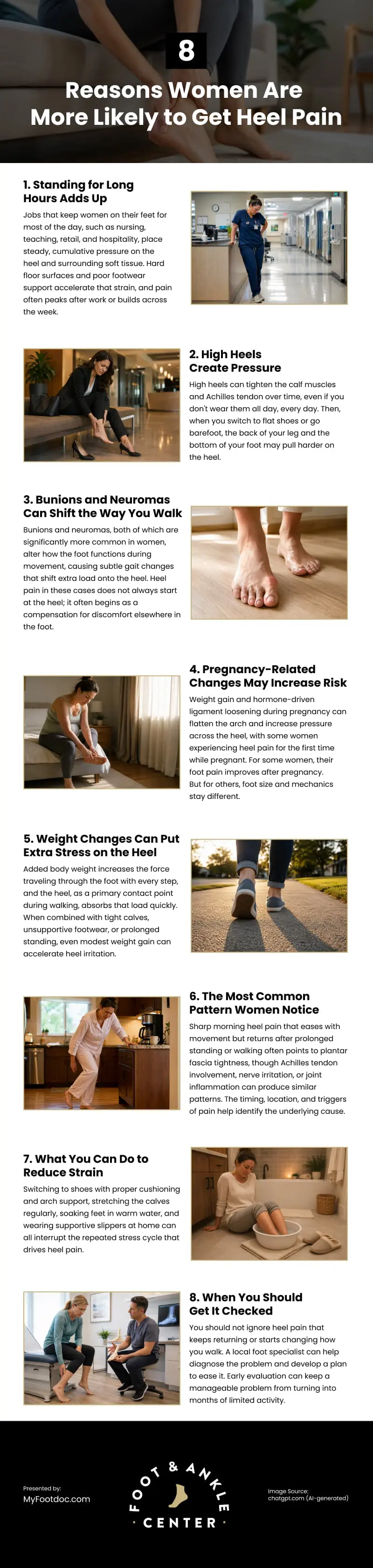
Heel pain is far more prevalent in women than in men, and the reasons extend well beyond footwear choices. Many women work in roles that require prolonged standing on hard surfaces, creating cumulative pressure on the heels that outpaces the body’s ability to recover, a pattern that often worsens over the course of a demanding workday or week. High heels alter posture and mechanics from the ground up, tightening the Achilles tendon and calf muscles in ways that affect the heel even on days heels are not worn. Bunions and neuromas, which are disproportionately common in women, change how the foot functions during movement and can shift extra load toward the heel through subtle gait compensations. Pregnancy introduces a compounding set of factors, weight gain and hormonal ligament loosening, that can flatten the arch and increase heel strain, sometimes leaving lasting changes in foot mechanics well after delivery. Body weight more broadly affects the amount of force transmitted through the heel with every step, and when combined with other risk factors, even modest changes can trigger or worsen symptoms. The most recognizable presentation is sharp morning pain that improves with movement but returns after activity, a pattern consistent with plantar fascia involvement, though other structures can produce similar symptoms. Small, consistent interventions, better footwear, regular calf stretching, and early treatment of forefoot problems can interrupt the cycle of repeated stress before it becomes a chronic and limiting problem.
source: https://myfootdoc.com/why-are-women-more-likely-to-get-heel-pain/
Comments
Download this infographic.