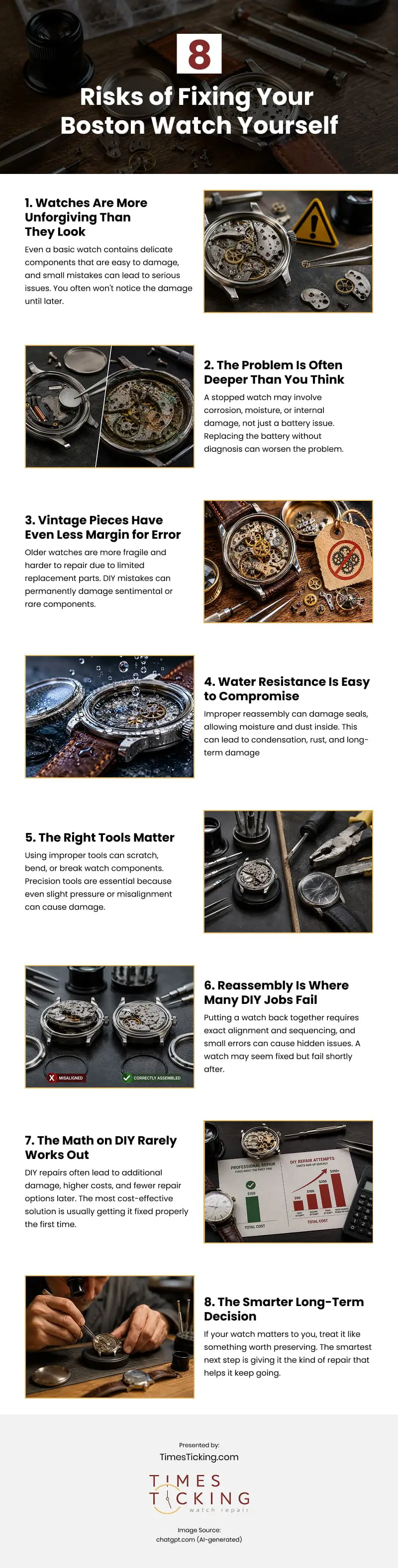
Watches may appear simple from the outside, but internally they contain highly delicate components that require precision, specialized tools, and expert handling to repair properly. Attempting a DIY watch repair can easily create more damage than the original problem, especially because many issues extend beyond what is immediately visible. A watch that stops running may involve hidden corrosion, moisture intrusion, worn seals, or internal mechanical damage rather than a simple battery replacement. Vintage and sentimental watches are even more vulnerable, as replacement parts may be difficult or impossible to source once original components are damaged. Water resistance is another common area where improper repairs cause long-term issues, since incorrect reassembly can compromise seals and allow moisture, dust, or condensation to enter the case over time. The repair process itself also depends heavily on precision tools designed specifically for watchmaking, as improper handling can scratch surfaces, bend mechanisms, or damage tiny moving parts. Reassembly is often where DIY repairs fail most, because even slight misalignment can cause a watch to malfunction later despite appearing fixed initially. While self-repair may seem like a cost-saving option, mistakes frequently lead to more expensive repairs and fewer restoration possibilities down the road. For watches that carry financial, functional, or sentimental value, professional repair offers the safest long-term solution by preserving both the craftsmanship and longevity of the timepiece.
source: https://www.timesticking.com/the-risks-of-fixing-your-boston-watch-yourself/
Comments
Download this infographic.