
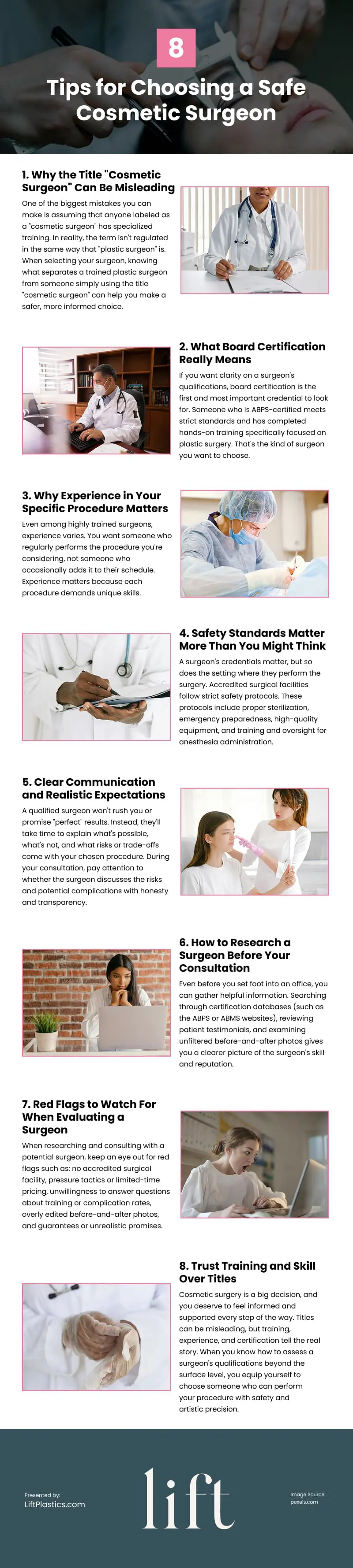
Choosing a cosmetic surgeon is a decision that directly affects both your safety and long-term satisfaction, and it should be guided by verified training, experience, and transparency—not titles alone. The label “cosmetic surgeon” is not regulated the same way as “board-certified plastic surgeon,” which means it doesn’t guarantee specialized surgical training. Board certification through the American Board of Plastic Surgery is one of the clearest indicators that a surgeon has completed rigorous, hands-on education specific to plastic surgery and adheres to strict professional standards. Just as important is experience in your exact procedure, since techniques, risks, and outcomes vary widely from one surgery to another. The safety of the facility also matters; accredited surgical centers follow essential protocols for sterilization, anesthesia, and emergency preparedness. A qualified surgeon will communicate openly, explain realistic outcomes, and discuss risks clearly and honestly, without pressure or exaggerated promises. Smart patients research credentials through official certification databases, review authentic patient experiences, and carefully evaluate before-and-after photos. Red flags include high-pressure sales tactics, vague answers about training, unaccredited facilities, and guaranteed results. When you look beyond surface titles and focus on certification, experience, safety standards, and honest communication, you protect yourself from unnecessary risk and position yourself for the best possible surgical outcome.
source: https://liftplastics.com/how-to-tell-which-cosmetic-surgeons-are-truly-qualified/
Comments
Download this infographic.