
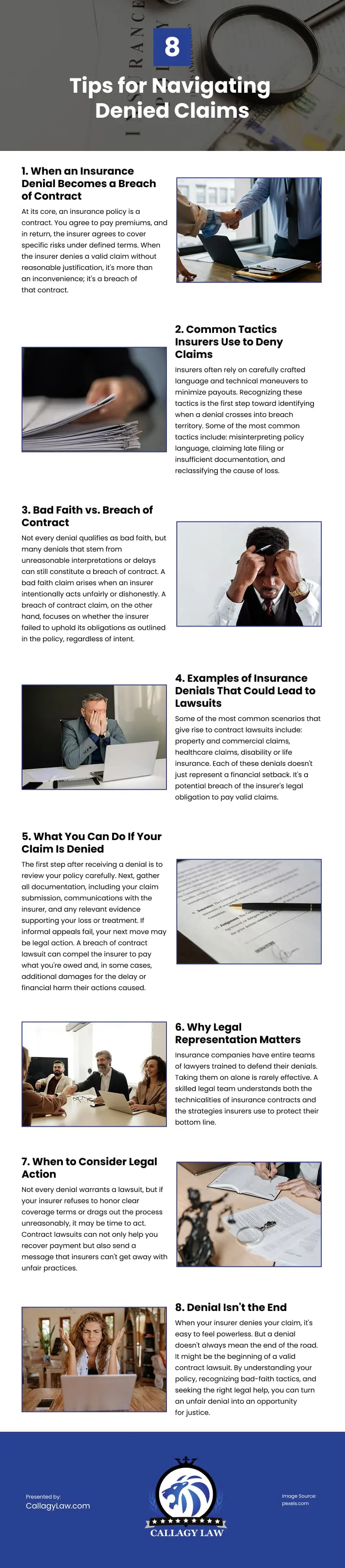
Insurance companies sometimes deny claims using technicalities, vague policy interpretations, or procedural excuses, and while some denials are valid, others break the insurer’s contractual duty to act in good faith. Because an insurance policy is a binding contract, an unjustified denial—such as misinterpreting policy language, alleging late filing, demanding unnecessary documentation, or reclassifying the cause of loss—can signal a breach of contract. Not every denial rises to the level of bad faith, which involves intentional unfairness; however, many unreasonable denials still violate the insurer’s contractual obligations, even without malicious intent. This often occurs in property, commercial, health, disability, or life insurance claims, where a refusal to pay can result in significant financial harm. When a claim is denied, the most important steps are reviewing your policy, gathering all relevant evidence and communication, and attempting an internal appeal. If that fails, legal action may be necessary to compel the insurer to honor the agreement and potentially recover additional damages. Because insurers rely on teams of lawyers to defend their decisions, having an experienced attorney who handles denied insurance claims can level the playing field. A denial isn’t the end—it can be the start of a valid contract claim that protects your rights and holds insurers accountable.
source: https://callagylaw.com/2025/11/18/holding-insurers-accountable-for-denied-claims/
Comments
Download this infographic.