
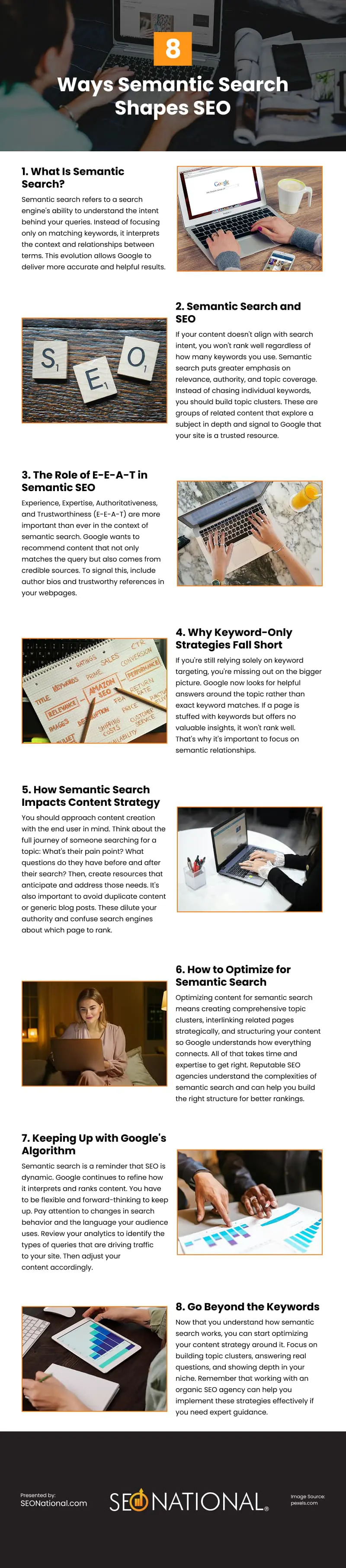
SEO has evolved far beyond simple keyword matching, with search engines now prioritizing user intent, context, and topic relevance in ranking results. Semantic search allows Google to interpret the meaning behind queries, understanding relationships between terms so it can deliver more accurate and useful results. This shift means content must align with search intent rather than rely on isolated keywords. Building topic clusters that explore subjects in depth signals authority and helps search engines recognize your site as a trusted resource. Credibility also plays a major role, as experience, expertise, authoritativeness, and trustworthiness influence whether content is recommended. Keyword-only strategies often fall short because pages that lack meaningful insights or comprehensive coverage struggle to rank, even when optimized for specific terms. A user-focused content strategy considers the full search journey, anticipating questions, addressing pain points, and creating connected resources that guide readers through a topic. Structuring content with clear internal links and logical organization helps search engines understand how pages relate. As Google’s algorithm continues to evolve, staying adaptable is essential, including monitoring search behavior, analyzing performance data, and refining content accordingly. Focusing on depth, clarity, and relevance enables stronger visibility and long-term organic growth.
source: https://www.seonational.com/how-semantic-search-shapes-seo/
Comments
Download this infographic.