
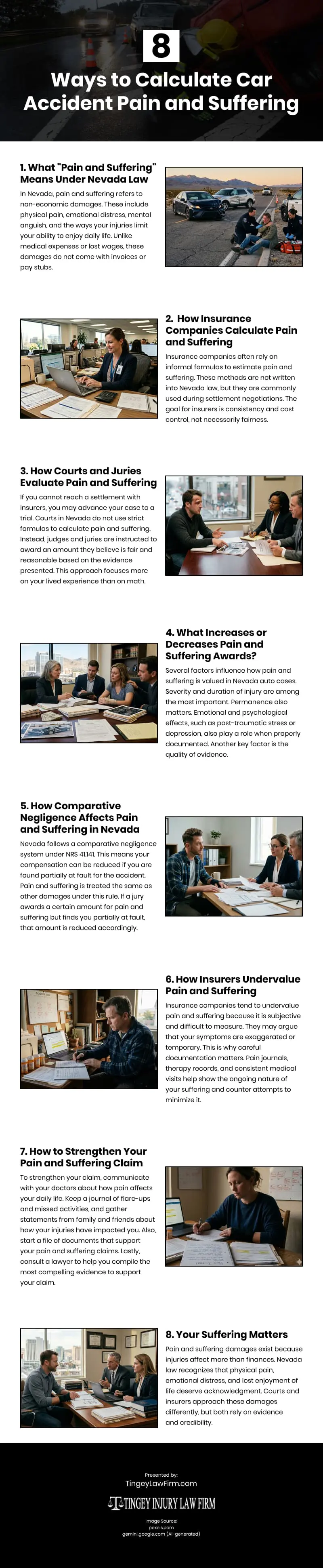
After a car accident, the true cost of recovery often goes far beyond medical expenses and vehicle repairs. In Nevada, these harder-to-measure losses are known as pain and suffering, a type of non-economic damage that includes physical pain, emotional distress, mental anguish, and the loss of enjoyment in everyday life. Because these damages do not come with receipts or fixed dollar amounts, insurance companies often use informal formulas during settlement talks, focusing on consistency and cost control rather than fairness. Courts and juries, however, take a different approach by considering the injured person’s actual lived experience and deciding on a fair amount based on the evidence. The value of pain and suffering can rise or fall depending on the severity of the injury, how long it lasts, whether it causes permanent limitations, and whether emotional effects such as anxiety, depression, or trauma are well documented. Nevada’s comparative negligence law can also reduce compensation if the injured person is found partly at fault. Since insurers often try to minimize these damages, strong documentation is essential. Medical records, therapy notes, pain journals, and statements from loved ones can all help show the real impact of an injury. Pain and suffering matter because recovery is not only financial, it is deeply personal.
source: https://tingeylawfirm.com/how-pain-and-suffering-is-calculated-in-car-accident-cases/
Comments
Download this infographic.