
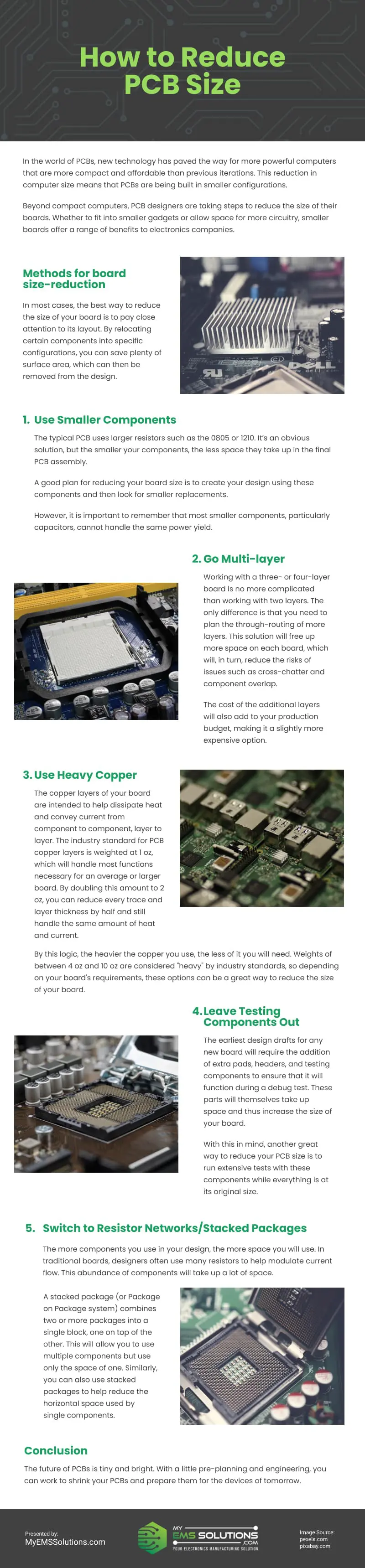
As electronics become more powerful and compact, PCB design has evolved to prioritize smaller, more efficient board layouts that fit modern devices while leaving room for added functionality. Reducing board size starts with thoughtful layout planning, where repositioning components and optimizing configurations can free up valuable surface area. Choosing smaller components is an effective strategy, as they naturally occupy less space, though designers must balance size reductions with power-handling limitations. Multi-layer boards also play a key role by distributing circuitry across additional layers, which minimizes crowding on each surface and can even reduce interference, albeit with slightly higher production costs. Another approach involves using heavier copper layers, which allow thinner traces to carry the same current and heat load, enabling more compact routing without sacrificing performance. During early development, boards often include extra pads and testing components for debugging; however, once functionality is confirmed, removing these elements can significantly reduce the final design size. Designers can also consolidate multiple components through resistor networks or stacked packages, reducing horizontal sprawl while maintaining electrical performance. Together, these techniques reflect a broader shift toward precision engineering and forward planning. With careful design decisions and an understanding of trade-offs, PCB manufacturers can create smaller, smarter boards ready to support the next generation of compact, high-performance electronic devices.
source: https://www.myemssolutions.com/how-to-reduce-pcb-size/
Comments
Download this infographic.