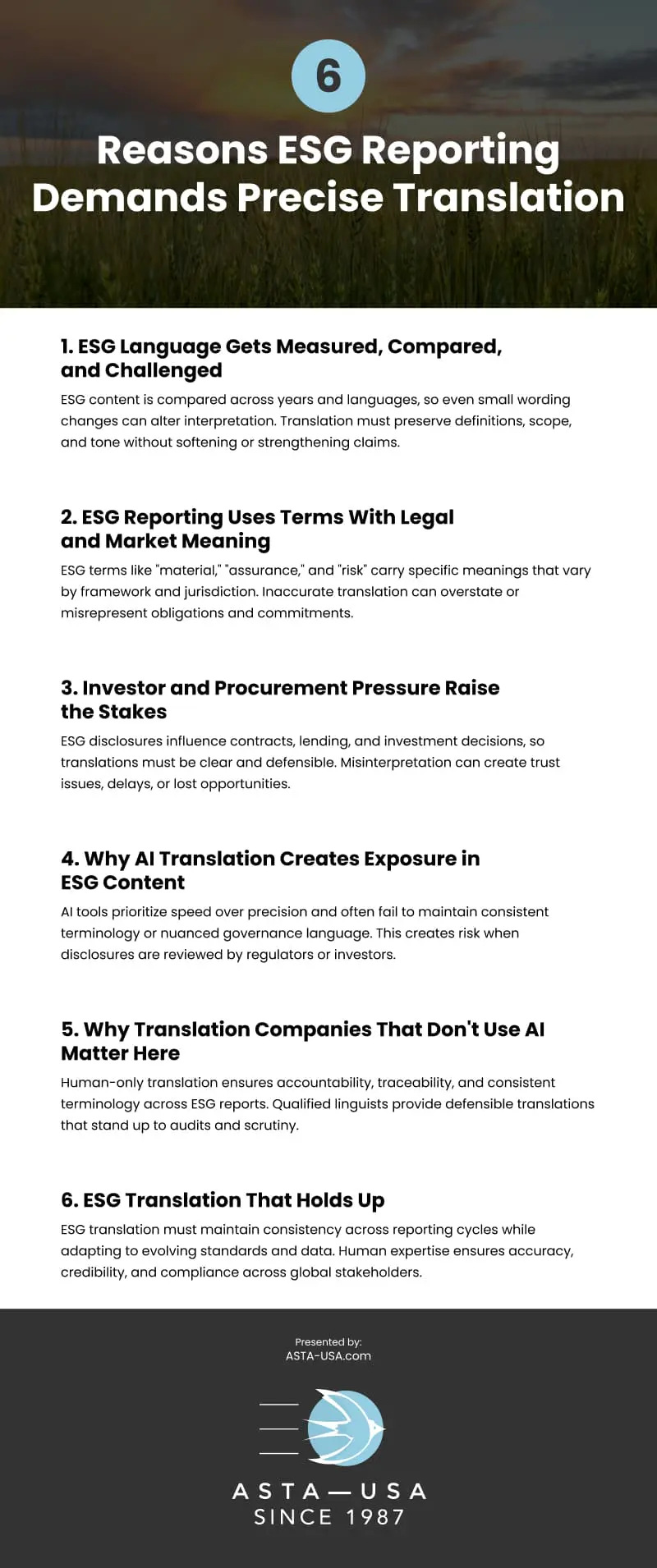
ESG disclosures have evolved into high-stakes compliance and reputation documents that influence investor confidence, regulatory scrutiny, procurement approvals, and long-term business relationships. Because these reports are reviewed across multiple markets and languages, accurate translation is critical to preserving meaning, intent, and credibility. Even subtle wording differences can change how ESG commitments are interpreted, especially when reports are compared year over year or measured against specific reporting frameworks and legal standards. Terms related to governance, materiality, assurance, and risk often carry technical meanings that vary across jurisdictions, making precision essential to avoid overstating obligations or creating misleading impressions. As investors and procurement teams increasingly rely on ESG disclosures to make decisions, unclear or inconsistent translations can delay approvals, weaken trust, or create compliance concerns. AI-powered translation tools, while fast, often struggle to maintain consistent terminology and nuanced language across complex ESG reporting, increasing the risk of misinterpretation during audits or reviews. Human-led translation services provide stronger accountability, contextual understanding, and traceable terminology management that better support regulatory and stakeholder expectations. Consistency across reporting cycles is equally important, as evolving standards and updated metrics require careful adaptation without altering the original intent of disclosures. Ultimately, high-quality ESG translation protects organizational credibility, strengthens transparency, and ensures sustainability commitments remain accurate, defensible, and understandable across global audiences.
source: https://asta-usa.com/why-esg-reporting-drives-demand-for-accurate-translation/
Comments
Download this infographic.