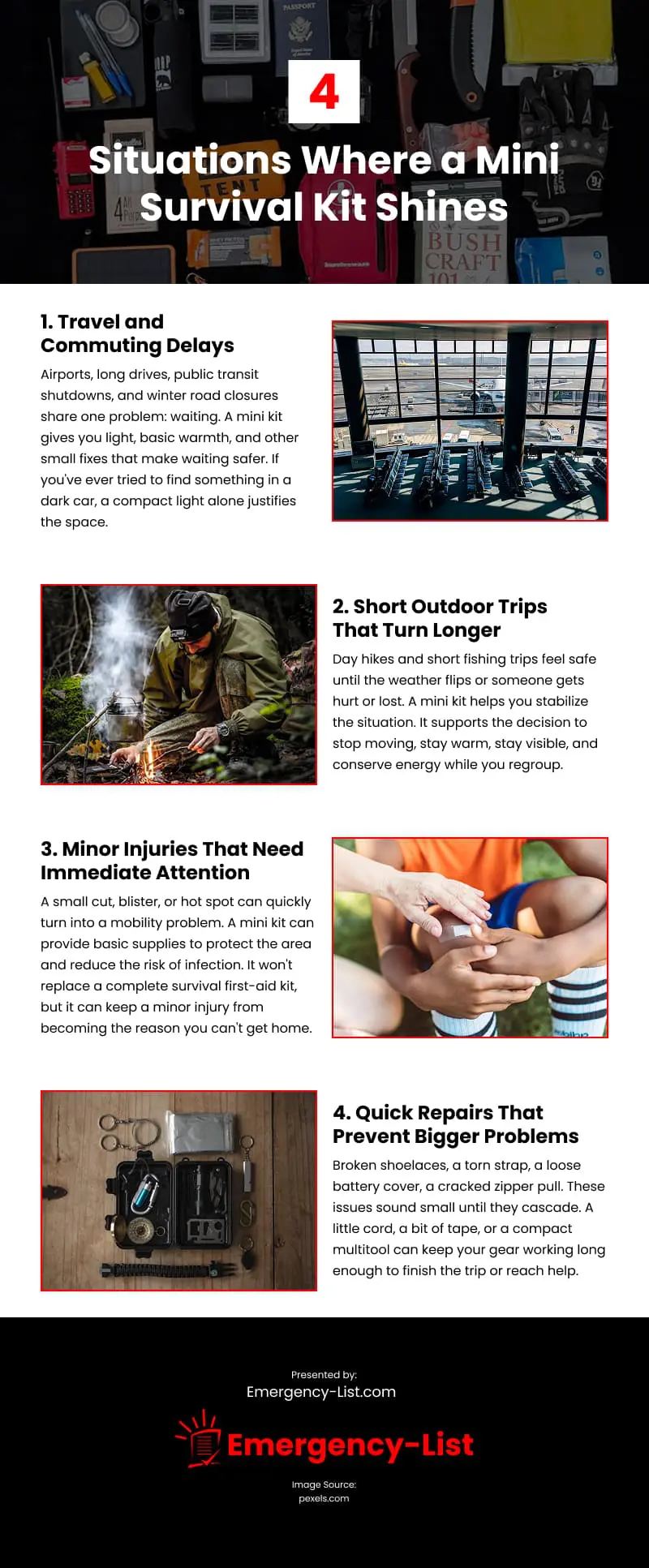
Mini survival kits are most valuable in short-term emergencies and everyday “in-between” situations where you still have options but need small tools to stay safe, comfortable, and in control. These kits are not designed for long-term survival scenarios but instead focus on bridging gaps during unexpected delays, minor setbacks, or disruptions that can quickly escalate if left unaddressed. Travel and commuting delays are one of the most common uses, whether it’s being stuck in an airport, caught in traffic, or dealing with transit shutdowns or winter road closures. In these situations, a compact kit with basic warmth, light, and simple essentials can make waiting safer and more manageable. Short outdoor trips can also become unpredictable when weather changes suddenly, or someone gets injured or disoriented, and a mini kit helps you pause, stabilize, and make safer decisions, such as resting, staying warm, and conserving energy. Minor injuries such as blisters, cuts, or small abrasions may seem insignificant, but they can quickly affect mobility, and having basic supplies helps prevent complications and keeps you moving. Even small gear failures like broken zippers, torn straps, or loose components can disrupt a trip, and simple repair items like tape, cord, or a multitool can prevent these issues from becoming larger problems. Overall, a mini survival kit supports flexibility, safety, and problem-solving when small challenges arise before they turn into serious emergencies.
source: https://www.emergency-list.com/mini-survival-kits-4-myths-4-uses/
Comments
Download this infographic.