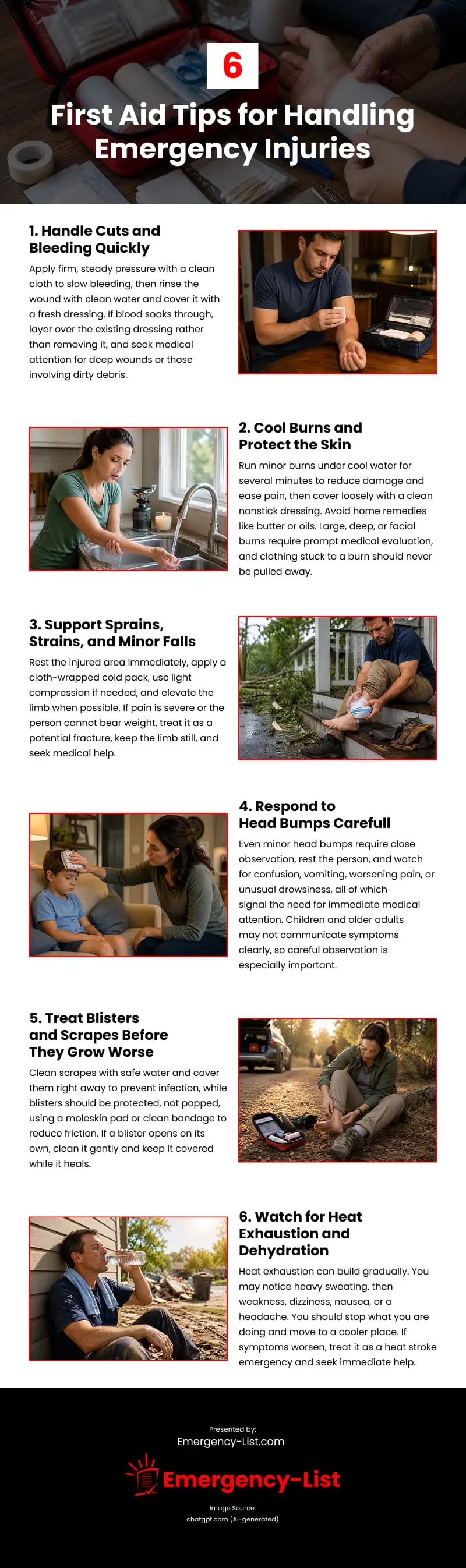
Handling common injuries confidently during an emergency does not require advanced training; it requires the right supplies, a calm approach, and knowing what to do first. Cuts and bleeding should be addressed immediately with steady pressure and clean water, and layered dressings should be used if bleeding continues, rather than disturbing the wound. Burns need cool running water rather than home remedies, and any burn that is large, deep, or on a sensitive area warrants medical evaluation. Sprains and minor falls respond well to rest, cold, compression, and elevation, though severe pain or an inability to bear weight may point to something more serious. Head injuries deserve careful attention even when they look minor, since symptoms like confusion or unusual drowsiness can signal a more serious condition — particularly in children and older adults. Blisters and scrapes are easy to dismiss but can become infected and debilitating without basic cleaning and protection. Finally, heat exhaustion can build gradually during physically demanding outdoor work, and recognizing early symptoms such as dizziness and heavy sweating allows you to intervene before the situation escalates into a medical emergency. Having a stocked first-aid kit and a basic plan in place makes these situations more manageable when they occur.
source: https://www.emergency-list.com/6-first-aid-tips-for-handling-injuries-in-an-emergency/
Comments
Download this infographic.