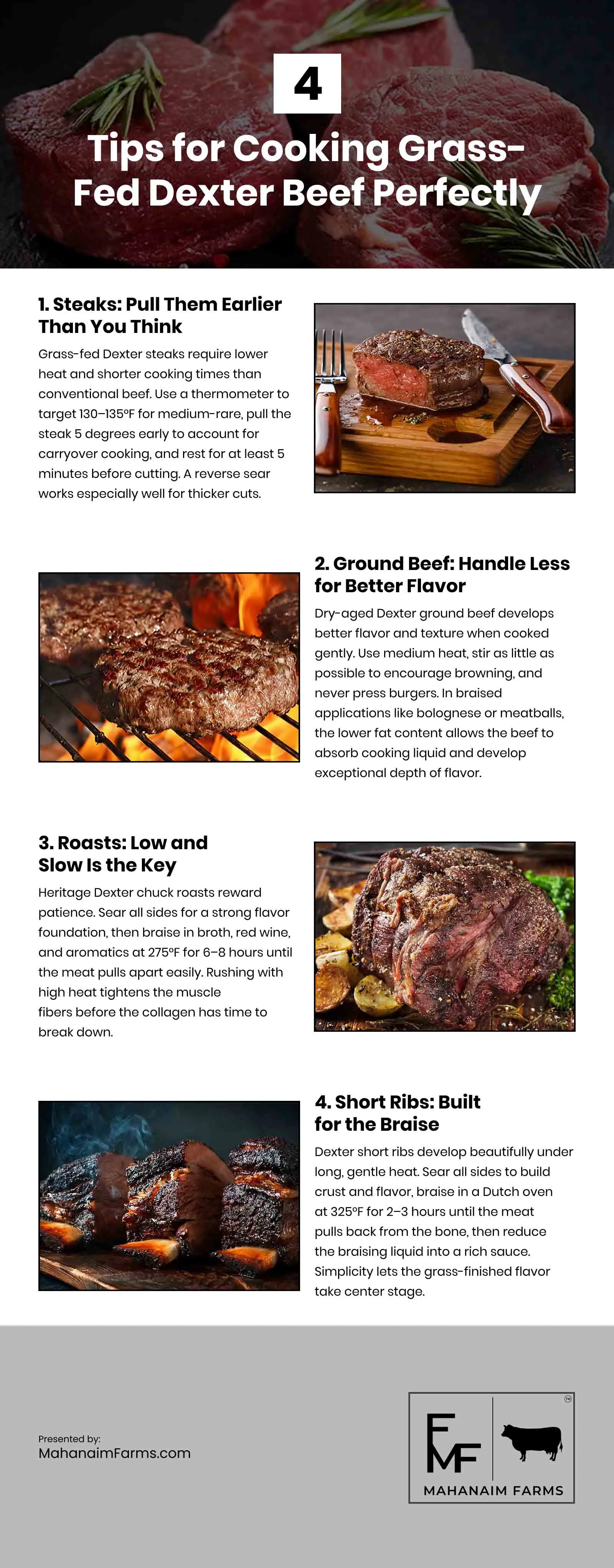
Grass-fed Dexter beef is a fundamentally different product from conventional supermarket beef, and the same qualities that make it taste better also mean it responds differently in the kitchen. Steaks require lower heat and a shorter cooking time than most home cooks expect, targeting 130 to 135 degrees Fahrenheit for medium-rare, pulling early to account for carryover cooking, and resting before cutting are all essential steps that protect the flavor and tenderness that slow maturation develops. A reverse sear works particularly well for thicker cuts, delivering an even cook from edge to edge without the risk of drying out. Ground beef from Dexter cattle rewards gentle handling, medium heat, minimal stirring, and no pressing on burgers, preserving the moisture and texture that make dry-aged heritage ground beef worth seeking out. In braised applications like bolognese or meatballs, the lower fat content is an advantage, allowing the beef to absorb the cooking liquid and develop a richness that conventional ground beef simply doesn’t. Chuck roasts and similar cuts thrive with low-and-slow braising at around 275 degrees for six to eight hours, where patience allows connective tissue to break down fully and the pasture-raised flavor to concentrate. Short ribs follow a similar path, seared on all sides, braised in a Dutch oven at 325 degrees for two to three hours, and finished with a reduced sauce that captures the depth the beef develops during cooking. With each of these cuts, the principle is the same: less heat, more time, and minimal interference, let the quality of the beef speak for itself.
source: https://www.mahanaimfarms.com/how-to-cook-grass-fed-dexter-beef-without-overdoing-it/
Comments
Download this infographic.