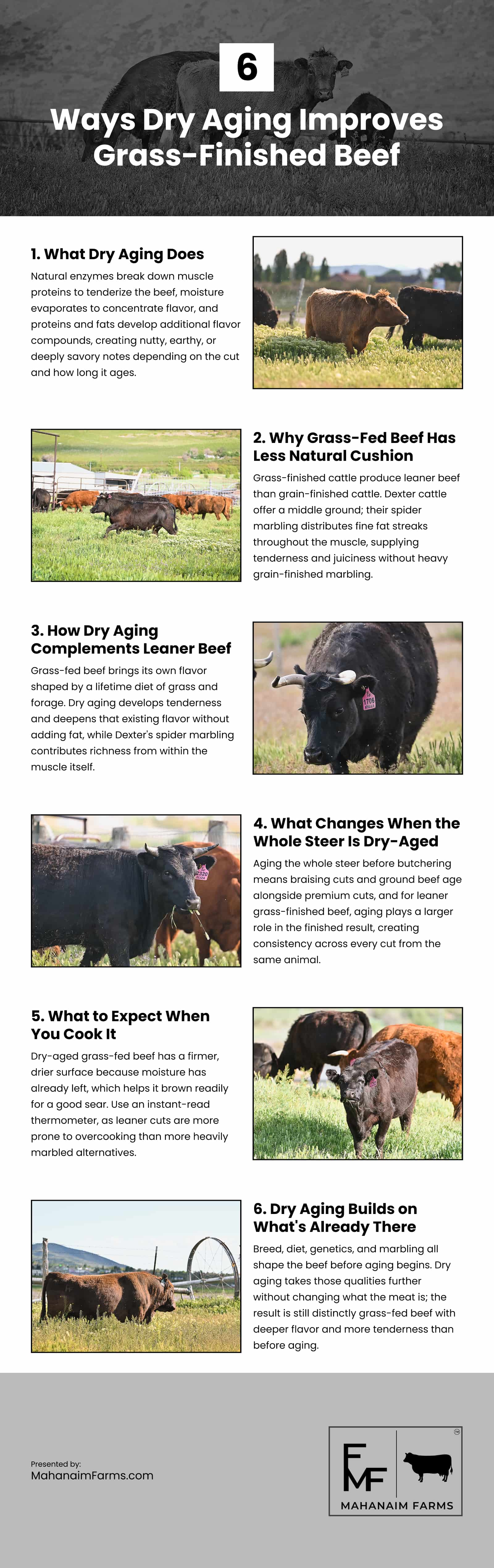
Dry aging has a reputation for turning great beef into something exceptional, and that reputation holds especially well for leaner grass-finished beef. The process keeps beef in a controlled refrigerated environment where natural enzymes break down muscle proteins, moisture evaporates to concentrate flavor, and proteins and fats develop additional compounds that can produce nutty, earthy, or deeply savory notes. Grass-finished cattle produce leaner beef than grain-finished alternatives, and Dexter cattle offer a middle ground through spider marbling, fine fat streaks distributed throughout the muscle that supply tenderness and juiciness without heavy grain-finished marbling. Dry aging complements those qualities by developing tenderness and deepening existing flavor without adding fat. Aging the whole steer before butchering extends those benefits to braising cuts and ground beef, not just premium steaks, creating consistency across every cut from the same animal. Dry-aged grass-fed beef arrives with a firmer, drier surface that browns readily for a good sear, but leaner cuts are more prone to overcooking, making an instant-read thermometer essential. The process builds on what’s already in the beef rather than masking it, producing a result that is still distinctly grass-fed with deeper flavor and more tenderness than before aging.
source: https://www.mahanaimfarms.com/how-dry-aging-improves-grass-finished-beef/
Comments
Download this infographic.