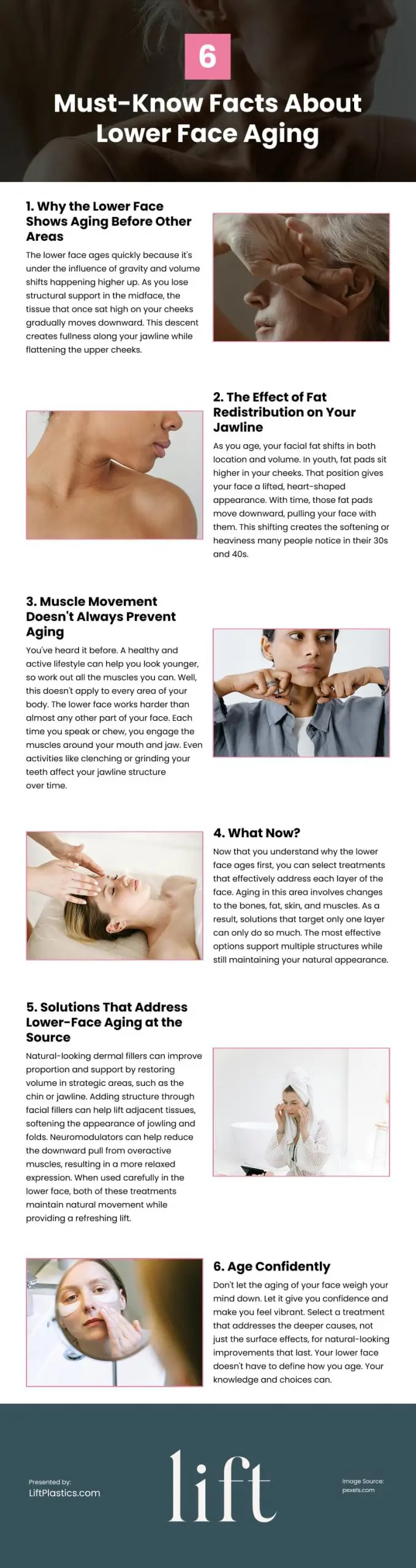

Midface aging is largely a story of tissue movement rather than tissue loss. Fat pads beneath the skin give cheeks their lift and projection, but when the ligaments holding them loosen over time, those fat pads shift downward, reducing upper cheek volume, deepening nasolabial folds, and adding heaviness to the lower face. As the cheek fat pads descend, the lower eyelids lose their support and take on a tired, hollow quality, while the upper cheek loses projection and the lower midface looks heavier. Fillers address volume loss effectively, but when tissue descent is the primary driver, adding volume may make the area appear fuller without addressing the underlying structural change. A midface lift takes a different approach, elevating and repositioning the soft tissue of the cheeks and securing it in place to rebuild the support structure that gives the upper cheek its lift and projection. Not every patient with midface concerns needs surgery, and a consultation with a facial plastic surgeon in Webster begins by determining whether descent or volume loss is the primary driver, then selecting the treatment combination that best suits the patient’s anatomy and goals.
source: https://liftplastics.com/how-a-midface-lift-addresses-sagging-cheeks/
Comments
Download this infographic.