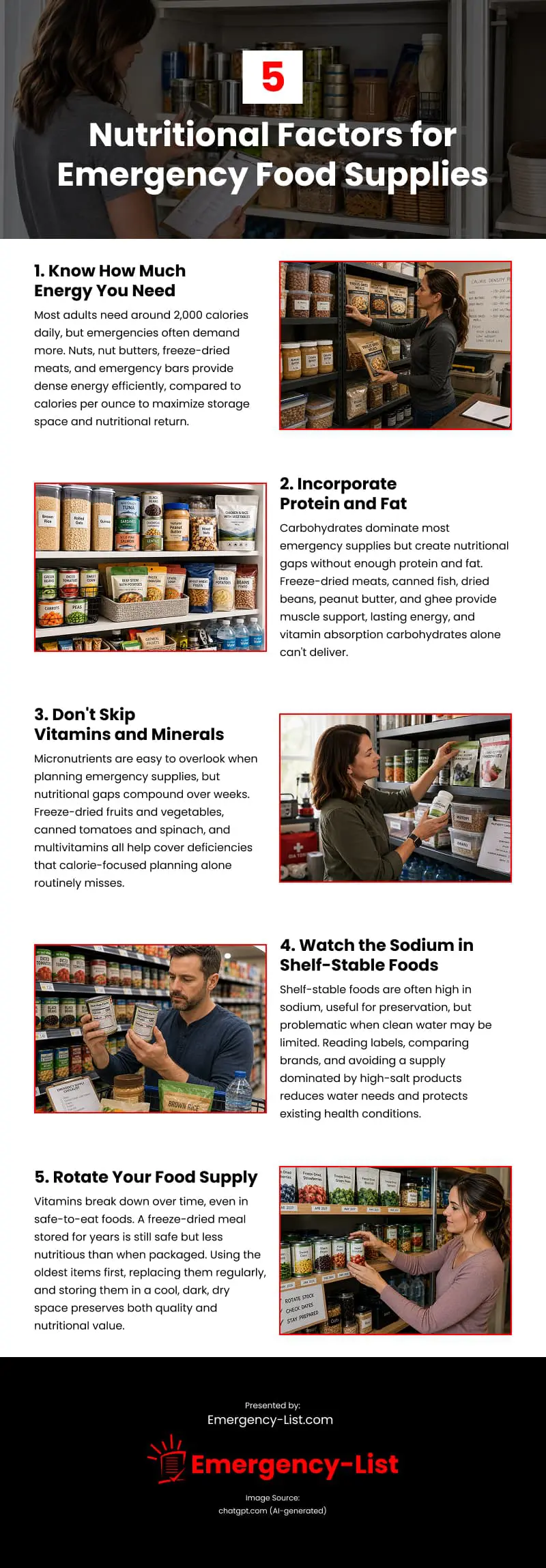
Building an emergency food supply around calorie counts alone leaves real nutritional gaps that compound quickly during an extended emergency. Most adults need around 2,000 calories daily under normal conditions, but physical demands during a crisis increase that need, and calorie-dense foods like nuts, nut butters, and freeze-dried meats provide more energy per ounce of storage space than snack-heavy alternatives. Carbohydrates dominate most emergency supplies, but without adequate protein and fat, energy becomes unstable, and muscle support weakens — freeze-dried meats, canned fish, dried beans, and peanut butter fill those gaps effectively. Micronutrients are the most commonly overlooked category: freeze-dried fruits and vegetables, canned tomatoes and spinach, and multivitamins help cover deficiencies that calorie-focused planning misses entirely. Sodium is another hidden challenge — shelf-stable foods are often high in salt, which increases water needs at exactly the time when clean water may be scarce. Comparing labels and choosing lower-sodium options where possible reduces that risk. Finally, nutritional value degrades over time, even in safe food — rotating stock regularly and storing supplies in a cool, dark, dry space helps keep emergency food as close to its original nutritional value as possible.
source: https://www.emergency-list.com/5-ways-to-build-a-more-nutritious-emergency-food-supply/
Comments
Download this infographic.