
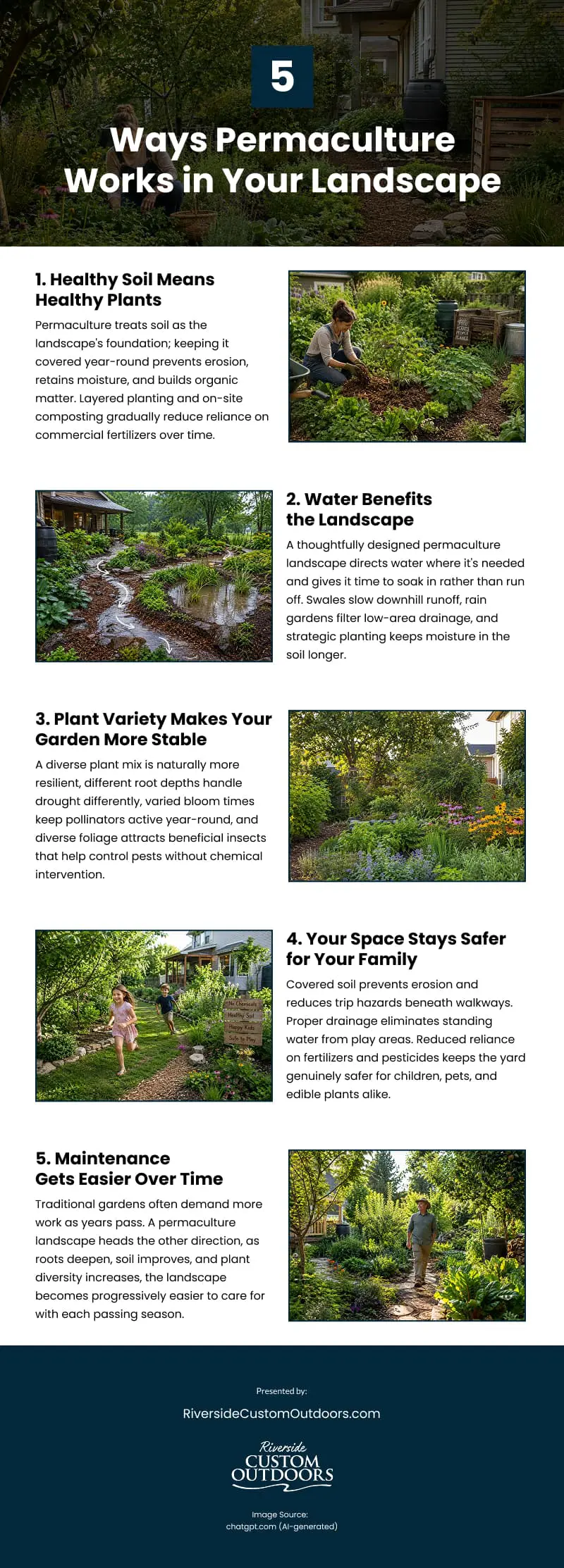
Permaculture design creates landscapes that work with the environment rather than against it — and the practical benefits show up in every part of the yard. Treating soil as the foundation means keeping it covered year-round with plants or mulch to prevent erosion, retain moisture, and build organic matter that reduces reliance on commercial fertilizers over time. Thoughtful water management directs runoff where it’s needed through swales, rain gardens, and strategic planting, rather than letting it erode soil or collect in the wrong places. A diverse plant mix is naturally more resilient — different root depths handle drought differently, varied bloom times support pollinators year-round, and beneficial insects manage pests without chemical intervention. Stable covered soil and proper drainage also make the yard safer for families by reducing erosion beneath walkways, eliminating standing water, and reducing the need for synthetic fertilizers and pesticides near children, pets, and edible plants. And unlike traditional gardens that demand more work as years pass, a permaculture landscape heads in the opposite direction — as roots deepen and plant diversity increases, the landscape becomes progressively easier to care for with each passing season.
source: https://riversidecustomoutdoors.com/how-permaculture-makes-your-garden-safer-and-stronger/
Comments
Download this infographic.


