
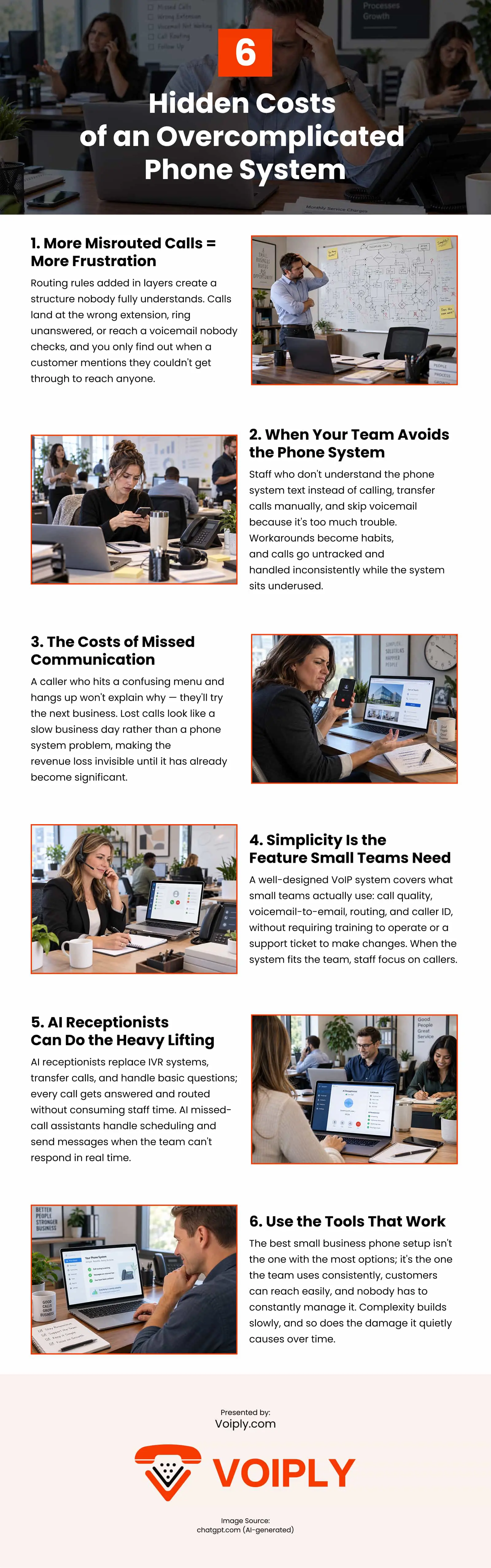
A small business phone system is supposed to solve communication problems, but complexity accumulated over time quietly creates new ones. Routing rules added in layers create a structure that nobody fully understands, with calls landing at the wrong extensions, ringing unanswered, or reaching voicemail boxes that nobody checks. Staff who can’t navigate the system default to workarounds, texting instead of calling, manually transferring, skipping voicemail, and those habits become the de facto communication process during the busiest stretches, when reliability matters most. The most expensive consequence is invisible: a caller who hits a confusing menu and hangs up doesn’t explain why; they simply try the next business, and the lost revenue looks like a slow day rather than a phone problem. A well-designed VoIP system covers what small teams actually use: call quality, voicemail-to-email, straightforward routing, and caller ID, without requiring training to operate or a support ticket to change. AI receptionists go further, replacing IVR systems, routing calls, handling basic questions, and sending follow-up messages when the team can’t respond in real time. The best phone setup for a small business isn’t the one with the most options; it’s the one the team uses consistently, customers can reach easily, and nobody has to constantly manage it.
source: https://www.voiply.com/blog/the-hidden-cost-of-an-overcomplicated-phone-system
Comments
Download this infographic.