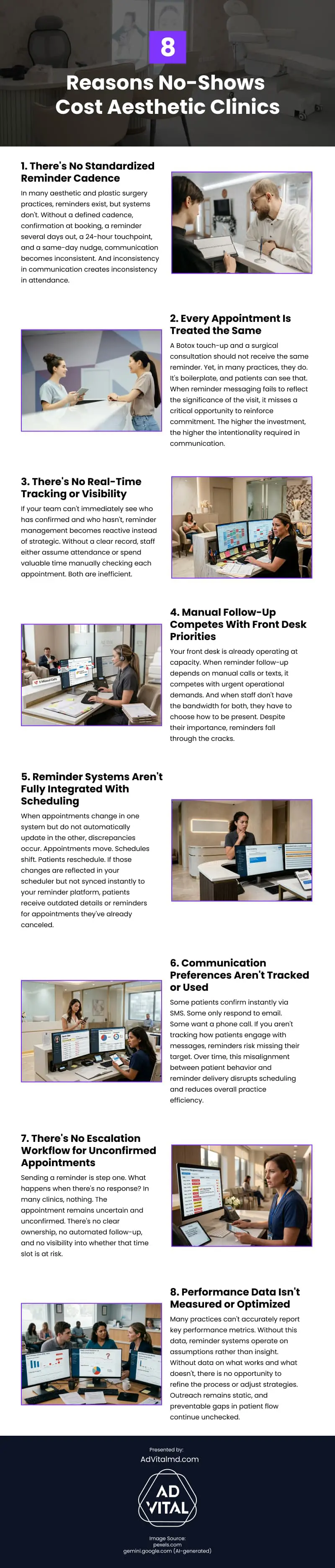
Missed appointments in aesthetic practices create more than scheduling gaps; they reduce revenue, disrupt provider efficiency, and place extra pressure on front-desk staff. One of the most common causes is inconsistent reminder communication, where patients receive irregular or poorly timed outreach instead of a structured cadence that reinforces commitment from booking through appointment day. Problems also arise when every appointment receives the same generic reminder, even though higher-investment procedures require more intentional communication to maintain engagement and reduce hesitation. Without real-time visibility into confirmations, staff are forced to rely on reactive scheduling, wasting valuable time manually tracking attendance. Manual reminder processes further strain busy front desks, causing follow-ups to fall behind when operational demands increase. Integration issues between scheduling and reminder systems can also lead to outdated or inaccurate messages, causing confusion for patients and increasing the risk of no-shows. Another major challenge is failing to track communication preferences, as some patients respond best to text messages while others prefer email or phone calls. Without escalation workflows for unconfirmed appointments, uncertain time slots remain unresolved until the last minute. Finally, many practices fail to monitor reminder performance data, making it difficult to improve outcomes or identify gaps in the process. By implementing integrated, data-driven reminder systems with personalized communication and automated workflows, practices can reduce avoidable no-shows, improve the patient experience, and create a more efficient, predictable schedule.
source: https://advitalmd.com/8-reasons-aesthetic-practices-lose-revenue-to-no-shows/
Comments
Download this infographic.